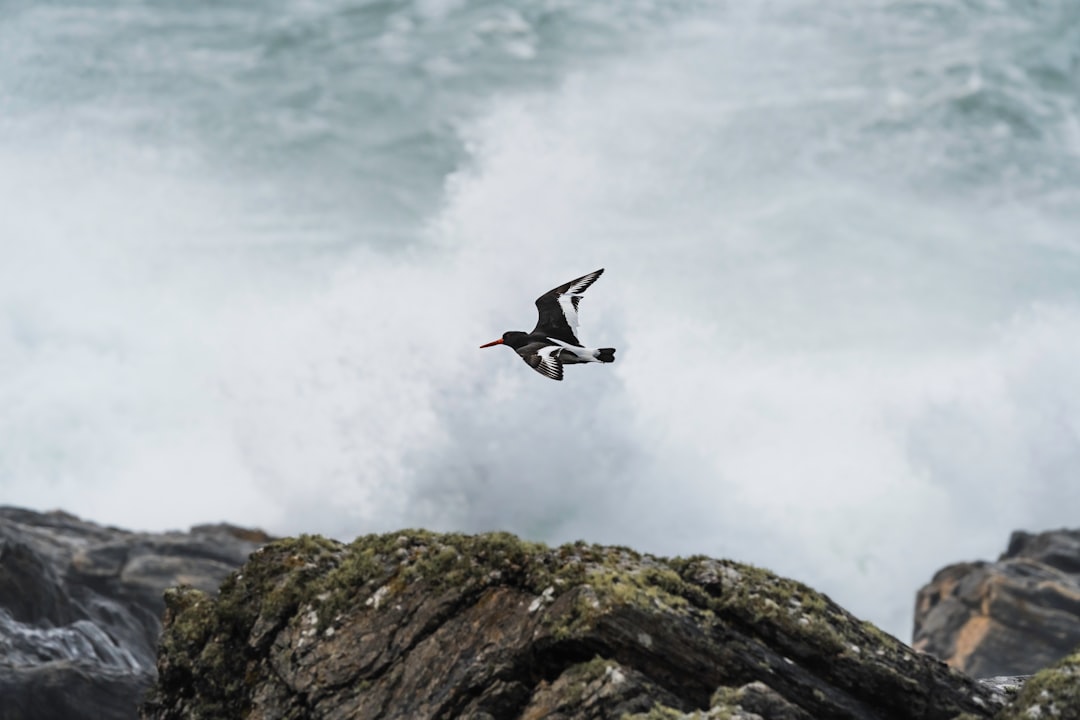
Eleven Times
Eleven times.
Someone else did the counting for you. At the ceremony, when the host read the number aloud, you sat in the audience, hands on your knees, the calluses on your palms rasping against your trousers. Eleven years. Eleven jumps into the sea. Seven people. You never counted them yourself. Your hands had other things to count: brooms, burlap sacks, the countless cigarette butts and shards of glass along the seawall.
The Sanitation Office issued you work logbooks, one a year. Big characters, spare words. Those eleven incidents, spread across eleven notebooks, add up to fewer than a hundred words. Someone once asked how eleven rescues could come to only seven people. You thought for a long while and said: some waves throw a person back onto the rocks first—so you climb up, catch your breath, and jump in again. The same notebook, two identical lines written in it, one after the other.
Now, take these entries out and lay them across the table—
August 3, 2015. Clear. The log reads: One person fell into the water off the east embankment. Rescued. Reported for work as usual that afternoon.
What it doesn’t say: the typhoon had just passed, and the sea was still murky. You were sweeping fallen branches beneath the embankment when you heard someone shouting up top; you dropped the broom and went down. Even in August the water was cold—cold like a hand clamped around your ankle. A girl in her twenties, gathering oysters, had slipped in. She clung to your arm with a death grip. You swam back with her, twenty meters, swimming what felt like half a lifetime. On shore you spat out mouthfuls of rank, salty water, and your legs shook for a whole hour. None of this is in the notebook. The notebook has only one line: reported for work as usual that afternoon.
April 16, 2018. Windy. The log reads: High tide. Rescued an elderly man who had fallen in. One broom broken.
The wind was fierce that day, the waves stacking layer upon layer. An old man fishing was swept off by a crest, sinking and surfacing. First you reached the broom out—it fell short and snapped, crack, against the edge of a stone. So you jumped. There’s no reasoning with the waves; you simply would not let go. By the time the man was pushed up onto the rocks, half your body was scraped raw. Your wife saw it, said nothing, and simmered a pot of ginger soup. The next day you rose at four-thirty all the same. The embankment was wet and slick, and you swept slower than usual, more carefully.
November 8, 2021. Cloudy, clearing. The log reads: Nothing amiss on the embankment.
What the notebook doesn’t know: that dawn you were there by three. A young man sat on the embankment, had been sitting a long time, sitting in a way that wasn’t right. You didn’t ask. You just swept around him. Swish, swish, swish. Three passes, and the sky brightened bit by bit. When he stood and began edging toward the edge of the embankment, you dropped the broom and ran, shouting before you jumped: “Hold on to me!” In the sea you said nothing but that one line, over and over. Three months later, someone was waiting for you on the embankment, holding a bag of apples. He said he’d gotten a job at the shipyard. He said that morning the whole world had held nothing but the sound of your broom, and the more he listened, the more he felt there might still be a way to live this life. You thought a moment and said: “I sweep there every day. If you pass by, no need to say hello.”
Pressed among these pages are a few more, with even fewer words:
June 2017. A child who fell in, returned to the family. The log reads: Reminded guardians to keep watch. January 2023. Winter. You jumped without time to shed your padded cotton jacket; it drank its fill of seawater, like lugging a sack of wet mud. You brought up a woman gathering seaweed. The log reads: Clothes soaked through. Reported for work as usual the next day.
September 23, 2025. High winds. The log reads: Rescued an angler.
What it doesn’t say: you were sixty-two that year, and your right knee ached whenever the sky turned gray. When you heard the shouting, you froze for two seconds. Just two. Then you kicked off your rubber shoes and went down. The waves came like a wall. This time, two young men leapt in behind you—one a food-delivery rider, one a college student. You shouted in the water: “One of you take each end!” The three of you heaved the angler up onto the mudflat and collapsed on the sand, gasping. The young men asked how old you were. You said, old enough to be your fathers. They all laughed—and somewhere in the laughing, one of them began to cry.
September 2026. Clear. The log reads: Took half a day’s leave.
On the day of the award you wore your most crisply pressed shirt, but on your feet, the same rubber shoes as always. On the big screen, the sea played, and these eleven years played with it. When the host read your name, you were caught off guard—you were used to Old Zheng, or else, the one who sweeps. Asked whether you’d been afraid, you thought a moment and said: “There wasn’t time to think about it.” A pause. Then: “Every time, there wasn’t time. A life is a life. You can’t just turn your back.”
Among those on stage with you was a rescue team’s deputy captain who had given his life in the line of duty; his daughter stood up there in his place, her back ramrod straight. There was a family, too—five generations keeping watch over a martyrs’ cemetery, ninety-two years now. Listening to them, you felt that what you had done hardly counted for anything. As the hall emptied, a student volunteer asked for your autograph. The hand holding the pen wasn’t as steady as the one that holds the broom; stroke by stroke, you wrote slowly, earnestly.
You didn’t miss your afternoon shift.
After the ceremony, you went back to the seawall as always. The sunset had spread the sea into a sheet of broken gold, and you swept, stroke by stroke, swish—swish—. The sound of the broom across the flagstones was exactly what it had been eleven years ago. An old man out for his stroll stopped to watch; you nodded to him and kept sweeping.
That evening, you opened a new logbook and wrote tomorrow’s date. The blank space after it went on and on, like the sea.
May none of it ever be needed, you thought.
The tide came in, and went back out. Tomorrow: work as usual.
(Adapted from true events. All characters are under pseudonyms.)
Based on a true story