The One-Armed Knight · Chapter One: The Severed Arm
Li Xiangyang would think, again and again, of the night before the accident.
That night he worked overtime until nine thirty. When he got home, eight-year-old Nuannuan blocked the doorway holding up two hair ties. “Daddy, Mommy’s braids are crooked.”
He pulled up a little stool and sat behind his daughter. Right hand gathering that soft hair, twist, loop, snap the tie in place—two minutes, and a pair of horn-shaped pigtails sat neat and even. Sufen laughed from the stove: “Those hands of yours are wasted on a stamping press. You should be a barber.”
He didn’t take it seriously. Those hands had spent sixteen years on the stamping machines at the hardware factory—two thousand strokes a day. He could feed sheet metal into the die with his eyes closed, steady enough to hold a match upright between two tabletops.
That day was August the ninth.
The next evening at ten, the workshop was rushing a rush order.
By all rights, his hand should already have been pulled back. Later he would replay it countless times and still could not remember how his right hand was still inside the die. He only remembered that after the machine’s sound, the workshop suddenly went very quiet—so quiet he could hear the sheet metal trembling on the floor.
A coworker pulled off his apron and tied it around his wrist. The factory truck ran three red lights on the way to the county hospital.
He didn’t cry out the whole way. Past a certain point of pain, a person can’t cry out. He asked only one question before they wheeled him into the operating room: “Is Sufen here yet?”
When the call came, Sufen was drilling Nuannuan on spelling words under the lamp.
She set the pencil down on the table and ran out the door with her shoes on the wrong feet.
The lights of the emergency corridor were blinding white. The doctor pushed the consent form across and pointed at the two characters: amputation. She asked—can it be saved?
The doctor said it couldn’t. Any longer, and the person would be in danger.
She bowed her head and signed, the strokes feather-light, as if afraid of waking something. When she finished, she crouched a while against the wall. When she stood, she smoothed her face flat. She remembered, crystal clear, that she had to be standing outside that operating room—so that the first thing he saw when he woke was someone who could hold things together.
Past midnight, the factory boss, Cao Mancang, arrived, put down thirty thousand yuan for the surgery, and thumped his chest: Xiangyang was hurt for the factory’s sake; the factory would take care of him to the end. Sufen clutched that wad of money and nodded at him three times.
She believed it then.
Li Xiangyang woke on the third morning.
His right arm, from the elbow down, was wrapped in thick gauze. What lay beneath the gauze, he knew. In the night the hand was still there—still itched, five fingers still curling. He reached to scratch, and his nails scraped against the bandage.
The nurse said it was phantom limb pain. You get used to it, slowly.
The day before discharge, he walked on crutches to the factory. A new lock on the iron gate, a slip of paper pasted in the gap: equipment maintenance, reopening date to be announced. He called Cao Mancang. For two days, a busy tone. From the third day: “The number you have dialed is no longer in service.”
The old man at the gatehouse spoke through the crack in the door: “Don’t wait. He owes money for materials. The trucks hauling out the equipment came by twice the night before last.”
Li Xiangyang stood a moment and pushed back the cigarette the old man offered. He’d quit seven years ago.
On the way back, he thought of only one thing: a work-injury claim needs paperwork, the paperwork needs the factory’s seal, and the factory had no one left. A chain, each link hooked to the next—one link empty, every link empty. But then he added half a sentence in his heart: the factory may be gone, but the principle isn’t. He memorized the address of the town legal aid office.
Niannian found out at her grandmother’s house.
Grandma said the machine had bitten it, told her not to cry—and not to cry in front of her little sister, either. She nodded and went back to do her homework. All that night, there was only a date written in her notebook.
At fourteen, deletion comes fast. Just last month Dad had said: when you get into the county’s best high school, Dad will buy you a laptop. She deleted that sentence from her mind, and along with it, deleted the new pens, the new shoes, all of it.
During the days of Dad’s hospital stay, she learned three things: cook rice porridge, turn off the gas, teach Nuannuan her pinyin. Every day she took her sister to the hospital, and before they entered the corridor, the two of them lined up at the foot of the steps to practice smiling. Only when they’d practiced enough did they go up.
Nuannuan asked why. She said: when Dad sees us smile, it hurts less.
September, and the arithmetic kept shrinking.
Rent, eleven hundred. Two children’s tuition, thirty-two hundred a semester. Follow-up visits, medicine, utilities. Li Xiangyang read the number in his bankbook over and over; the number never grew by a single digit. No word of compensation, no idea where a lawsuit would even begin.
Through Chunmei from the same village, Sufen heard that electronics factories in Shenzhen were hiring—room and board included, and with overtime you could make over five thousand a month.
That night, after the children were asleep, the couple talked in the inner room.
Sufen spoke first: “I’ll go.”
Li Xiangyang was silent for a long time. Finally he said: “I’m a one-armed man now. If you go, I won’t stop you. But let’s be clear about one thing—you’re not abandoning me. Our family just needs someone earning right now.”
Sufen said, “I know.”
Then added: “You won’t be idle at home. Look after the girls, feed yourself. Once I’m on my feet, I’ll bring you all out.”
Li Xiangyang nodded. Nodded twice, then stopped. He wanted to say: tomorrow I’ll start looking for work—one hand can still find work. But the words went back down his throat—he couldn’t even tie his own shoelaces yet.
Sufen packed until two. Li Xiangyang lay with his back to her, eyes open, listening to the zipper open and close, again and again, like someone slowly, slowly pulling apart a wound on his chest that had never healed.
Neither of them cried. From that night on, this household had a rule: no matter how big the trouble, no tears in front of the children.
Sufen left a week later, before dawn.
Her bus was at five forty; she was up at four. She hadn’t expected Niannian to be awake, crouched in the outer room boiling water.
“Mama, I’ll see you off.”
Mother and daughter walked the streets before first light, neither mentioning the road ahead. At the station, Niannian pulled a plastic bag from her pocket: boiled eggs and a note folded in four. “Eat the eggs on the way. Read the note when you get there.”
As the bus pulled out, Sufen smoothed the note flat. Just one line, in Niannian’s writing: Mama, I’ve got the home front. Don’t worry.
She turned her face to the window. Dawn was barely breaking, a line of orange-red pressed under the clouds. She didn’t look back. She was afraid that if she did, the bus couldn’t leave.
In her bag was a drawing Nuannuan had slipped in the day before: four people in crayon, standing in front of a house, the father’s hands drawn enormous. Sufen counted the people twice, then put the drawing away against her chest.
Li Xiangyang began training his left hand.
Tying shoelaces: forty minutes the first day. Tie, untie, tie again, until his fingers cramped. Chopsticks and peanuts: one pick, it rolled; another pick, it rolled again. On the fifth day, when he lifted the first one, steady and sure, he was alone in the house, and he said “Hey!” out loud to himself.
Buttons. Cutting vegetables. Wringing a towel. He dropped a bowl once and knelt to pick up the pieces, one by one. Niannian wouldn’t let Nuannuan laugh, and wouldn’t let her help either—Dad had said, I do it myself.
One night Nuannuan got up to use the bathroom and saw her father sitting alone under the lamp, newspaper held up in his left hand, reading it aloud, word by word.
“Dad, what are you doing?”
“Practicing my hand—and my mouth,” Li Xiangyang said. “When your hands have a skill and your mouth knows the score, you can stand up straight when you walk out that door.”
Nuannuan half understood, and went back to bed. Li Xiangyang set down the paper and looked for a long time at the right sleeve, hanging empty at half length.
One evening in October, after her bath, Nuannuan came over holding up the hair ties: “Daddy, braids.”
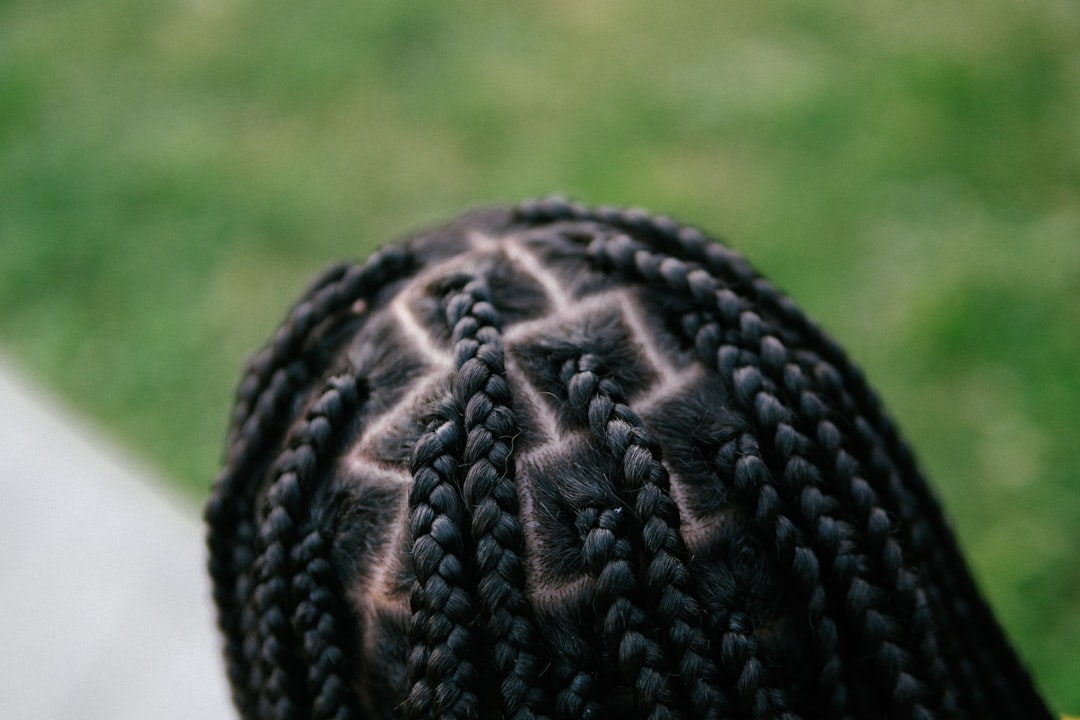
Since Sufen left, this job had fallen to Li Xiangyang. You can’t stretch a hair tie one-handed. He’d tried holding one end in his teeth and pulling the other with his left hand; he’d tried looping it around his knee. The first braid took twelve minutes. Crooked. The second was faster. Still crooked.
Nuannuan studied herself in the mirror, turning this way and that. “Prettier than Mommy’s.”
“Don’t talk nonsense,” Li Xiangyang said. “Your mom’s are even.”
“Even isn’t pretty.” Nuannuan cupped her two crooked braids protectively. “Crooked ones look like two little brooms. I’m wearing them to school tomorrow.”
Li Xiangyang laughed. And as he laughed, his nose stung—he bent his head to gather the hair ties and pushed it back down.
He understood in his heart: the craft of these hands was gone. But the craft being gone didn’t mean the man was gone. As long as he could still get up tomorrow, still sit on this little stool, he was still the dad who could braid hair—crooked, but braided.
At the inner-room door, Niannian had been watching—how long, he didn’t know. Before going back, she tapped the doorframe twice, softly, like greeting someone.
At night, Li Xiangyang couldn’t sleep. He counted the money in his phone, then counted it again.
Past eleven, the whir of an electric scooter passed through the alley below, its headlight sweeping the wall, a flash and gone. A night-shift delivery rider. He leaned on the windowsill and watched two of them pass.
A few yuan a run, through wind and rain—but it was cash in hand, money earned today, paid today.
Just then his phone buzzed. In the hometown group chat, a voice message from Ma Tao, the station manager at a delivery depot. Just one sentence:
“Xiangyang, heard you’re back? Come sit at the station sometime. I’ve got a job here, brother—work you can do with one hand.”
Li Xiangyang stood at the window, phone in hand. Under the streetlight at the alley’s mouth, another electric scooter turned in, its light throwing his shadow long against the wall.
He pulled the curtain shut and glanced back at Nuannuan, fast asleep. Her braids weren’t undone yet, sticking out crooked.
Tomorrow, first, learn to ride a scooter—the left-handed way. In a few days, the legal aid office, to ask about the work-injury claim.
(Adapted from true events. All names are pseudonyms. To be continued.)
Based on a true story