The Warm Ledger
There is a debt you have carried for ten years, never daring to put pen to paper.
Eleven at night. Only one lamp still burns in the community duty room. The wind rises again, driving wutong leaves against the window—one tap, then another. You unscrew the pen cap and spread the blue-covered diary beneath the light. Its edges have gone frayed and curled, like an account book worn smooth by the years.
The word ledger has a history. Your grandmother once worked in the tofu shop back in her town, and every night she’d click away on a chipped old abacus, murmuring: The tofu accounts must never wait for morning. You were seven or eight, crouching by the stove, hearing it as idle chatter. Now you’re past fifty, twenty-some years as secretary of the Linjiang neighborhood—thirteen hundred households under your care—and at last you’ve tasted the weight of that sentence: when accounts are clear, hearts are at ease.
But the entries in your ledger are precisely the ones you can never collect back.
The wind sharpens. Pen hovering above the page, your mind is suddenly swept back to this afternoon—
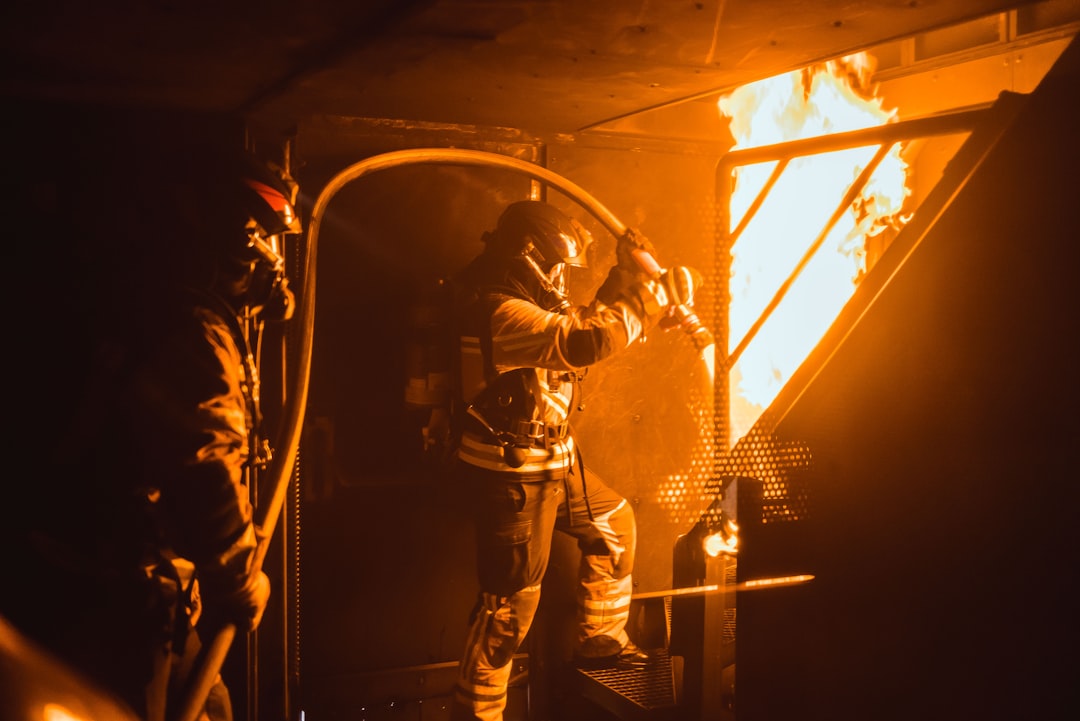
Three o’clock. Wind came charging straight off the river. The district group chat exploded: Building 7 of Linjiang Court, sixth floor—the sheet-metal balcony cover had been torn loose onto the roof, hanging half over the eaves, swaying! Below: an elementary school, a main road, the four-thirty tide of children leaving class. You grabbed your coat and ran, jogging and dialing all at once. The emergency response spun into motion—the cordon went up, the fire truck arrived. Squad Leader Lei cinched his safety rope and began to climb. The rooftop after rain was slick as glass; on hands and knees he pressed himself against the wall, a single point of orange rising slowly up the gray building. Below, hundreds of faces tilted upward. No one made a sound. Sparks from the cutting torch flickered in the wind like a stick of incense someone was holding their breath over. In under two hours, the metal sheet was down and nailed fast. What had been suspended was more than that sheet of metal. As the crowd dispersed, a small student with a backpack tipped his face up and called: Bye-bye, uncle!—and up on the roof, that dot of orange waved back.
This entry is easy enough: Such-and-such a date. Wind tore loose sheet metal. Danger removed. No injuries. But you cannot bring yourself to write it. Those hundreds of upturned faces—the ledger has no column for them.
The pen finally descends; a drop of ink blooms outward. In its scent, a crumpled rent-notice surfaces.
Three months ago. The dog days of summer. Song Yu stood before your desk, six-year-old Tuantuan in hand, eyes rimmed red. Subsistence allowance, a rented room, the landlord’s collection calls arriving one after another—calls that made the child shrink behind her mother. The phone rang again; you reached over and took it yourself, speaking for her: One more day’s grace. Just one. After hanging up, you pressed your hand over Song Yu’s trembling fingers and said only the words you always keep ready: Family first, then reason. That very afternoon you took Auntie Ma, the floor leader, out into the sweltering heat to look at rooms. One place, north-facing, damp; two, over budget; a third, a fourth, a fifth… Five places seen and dusk was falling. The sixth: a modest two-bedroom, forty-odd square meters, windows facing south, a breakfast shop downstairs. You and Auntie Ma exchanged a look. This was it. You paid the deposit and first month’s rent on the spot. Song Yu stood in the middle of the empty living room, then suddenly bent down, fished a piece of fruit candy out of one of Tuantuan’s worn old cotton shoes, unwrapped it, wrapped it back up exactly as before, and pressed it into your palm. It’s dirty—don’t eat it. Keep it to remember. The next day, mother and daughter moved in. From walking through the community’s door to sleeping in their own home: less than twenty-four hours.
For this entry you write: Advanced some amount, awaiting repayment. Song Yu comes back each month to pay—ten yuan, twenty—every sum entered, line by line. What you want is not to cancel her debt, but to leave her dignity intact.
The ink dries. You turn the page; your fingertip drags across the paper and somehow picks up the warmth of an old towel. The towel isn’t on the page, of course—it’s in your memory.
Granny Zhu, eighty-one, lives alone. Her rooms are so crammed with hoarded things only one person can squeeze past sideways; old newspapers stacked up to the windowsill. The first time you came to persuade her, before you could finish, her cane struck the floor three times, tok tok tok: My things—who are they bothering? The door shut. You stood in the stairwell, breathing the camphor smell leaking through the crack, mixed with the dust of old paper. Xiao Zheng, the grid worker, said: Persuasion won’t work on her. You said: Then we won’t persuade. From then on, every few days, you took turns dropping by—not a word about the clutter, just small talk. Listening to her talk about her late husband’s skill at mending clocks and watches; about the son up north who comes home once a year; about the pickled radish she made in her youth, famous through the whole village. When the weather turned cold, Xiao Ai handed her a hot towel at the door first thing, to warm her hands. On the ninth visit, Granny Zhu suddenly seized Xiao Ai’s hand: You people—you truly care about me. Clean it out. The discarded belongings filled seven truckloads. Sunlight poured through the whole window for the first time. Granny Zhu polished the windowsill until it shone and lined it with her pickling jars: When it’s ready, I’ll share it with the neighbors.
This is the hardest entry to write. What does a hot towel cost, a few yuan? And kindness—what’s the going rate per catty? Pen in hand for a long while, in the end you draw only a small sun.
The wind is quieting. You turn to the very last page of the diary. Here it is—the entry carried for ten years, never dared written.
Not one entry, but the sum of many: Squad Leader Lei’s wave from the rooftop, Song Yu’s piece of candy she couldn’t bear to eat, the sunlight on Granny Zhu’s windowsill, the drunk men walked safely home at midnight, the children taken into the activity room over summer break—a chair, a bowl of ginger soup. For ten years you tried to collect these debts, and not one could be collected. They had changed their shape, drifting quietly from building to building: those who had been helped turned around and helped others; those who had been warmed went on to warm someone else. Compounding like interest, until they swelled into a whole neighborhood’s worth of warmth.
At last, you set pen down—stroke by stroke, careful and upright:
“This debt shall not be called in, nor cancelled. The principal rests in human hearts; the interest travels with the people.”
You cap the pen and blow out the lamp. Outside, the wind has stilled. Tomorrow, it should be a clear day.
(This story is adapted from real events. All names are pseudonyms.)
Based on a true story