Holding On · Chapter 11: The Shop the Cold Couldn't Kill
Three days after the typhoon passed, the sky was impossibly blue.
I rode my scooter around onto Jiefang Road. Broken branches still hung from the street trees, and the city greening crew stood on ladders sawing them down; the scent of wet sawdust hung in the air, clean and faintly bitter. The floodwater had receded, revealing the black sheen of the asphalt beneath. The whole street was like someone recovering from a long illness, coming slowly, inch by inch, back to life.
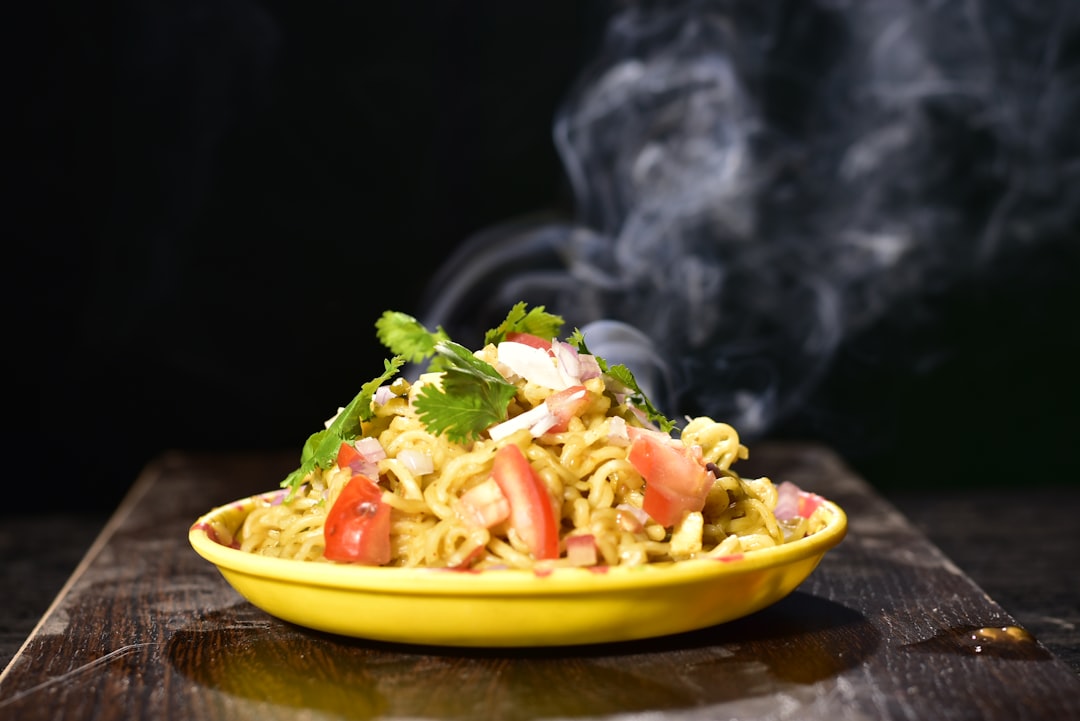
Uncle Kang’s little shop was wedged between a pharmacy and a phone store, its roll-up door half raised, the glass fogged with steam—the stove was lit. When someone asked Uncle Kang how badly the typhoon days had hurt him, he didn’t even look up. “The door was closed. The fire wasn’t.”
In this city, wherever a stove is burning, nothing has truly fallen.
Xiao Fei was crouching by the entrance with his phone, and he sprang up when he saw me. “Dashan! It blew up! The video from the night of the typhoon—it blew up!” The riders relaying medicine through floodwater, the bowls of ginger-soup noodles carried one after another into the inpatient wards, a drenched man bowing deeply before the nurses’ station—seven minutes of footage, passed all over the city in two days. The most-liked comment read: The wind can tear down a sign, but it can’t blow out a stove fire.
The platform people came too. Station Chief Zhou arrived in person, holding a wooden plaque, green with white lettering: Riders’ Rest Stop. The first batch in the whole city, and the first plaque of all, hung right here—rest, hot meals, charging, drinking water. Anyone welcome.
“I used to manage on-time-delivery rates,” said Station Chief Zhou, his hand trembling a little as he passed the plaque over. “Now I’m learning to manage people’s hearts.”
Uncle Kang took it with his usual gruffness: “Hang it, hang it—but you’re paying the electric bill.” Then he turned around and cleared the table by the window, and hauled over a case of bottled water besides.
Sister Zhao came at noon. She didn’t step inside. She slapped a thick kraft-paper envelope into my palm, its corners worn soft.
“The brothers at the station chipped in. For Tiantian’s surgery. You can’t carry this alone.”
The envelope was heavy. I weighed it in my hand, like weighing a bag of flour.
“Sister Zhao, I’ll take the thought. Not the money.”
“Chen Dashan!”
“It’s not that I can’t carry it.” I pressed the envelope back into her hands. “It’s that I still can. When a tree falls, no amount of helping hands feels like enough; but when a tree stands on its own, you let it grow upward by itself. If I take this money, then every bowl of dough I knead from now on I’ll be thinking, this was given by others—and I’d never be able to straighten my back again.”
Sister Zhao stared at me a long time, eyes reddening, and stamped her foot. “You and your stubbornness—you’ll be the death of me!” She stormed off two steps, then stopped, her back to me, and shouted: “The day of Tiantian’s surgery, I’m standing there with you! That much you have to accept!”
I said fine. That much I could accept.
That night I couldn’t sleep. After Tiantian had drifted off, I felt my way in the dark to the top of the wardrobe and pulled down a cloth bundle. Inside was a wooden sign, two characters on it: Hold On.
Ten years ago, when I took over that twelve-square-meter storefront, business was so quiet in the first month you could hear the hum of the freezer. At night I kneaded dough alone in the back kitchen, kneading until the gluten formed, arms aching and trembling, and my tears fell into the flour. The next day I bought a wooden board, wrote “Hold On” on it in marker, and hung it above the door. Not written for the customers. Written for myself. On every stroke I pressed hardest at the end, as if afraid the wind might blow the words away.
That sign hung for five years. There was a college girl with a ponytail who ate there from freshman year to senior year, always at the window table before exams, a bowl of plain noodles with one egg. One winter she came especially often and spoke especially little, and before picking up her chopsticks she would always stare at the sign above the door for a while.
Five years ago, Tiantian was diagnosed with congenital heart disease, and that same year the landlord took back the space to raise the rent. With both hands full, I couldn’t save the noodle shop, and that was that. On the last day I made no farewell of it. I saw off the last table of customers, took down the sign, wiped it three times, wrapped it in three layers of cloth, and stuffed it on top of the wardrobe. I told myself: when I’ve caught my breath, then we’ll see.
That breath took five years.
Dust floated up in the lamplight. I sat holding the wooden board half the night, the way you’d hold your younger self.
Early the next morning, Uncle Kang called me into the shop, half-closed the door, and pushed his account book across the counter. “Forty burgers a day if we’re lucky, rent is eight thousand a month. When I can’t sleep at night, I’m clicking away at the abacus. That skill of yours, wasting away in my shop—that’s a crime.”
I didn’t answer.
“Open a window in my shop. Call it ‘Hold On Noodles.’ I provide the stove and the storefront, you provide the craft. Split the profit on every bowl down the middle, books settled daily.” He counted on his fingers. “Let’s be clear about one thing first: this isn’t charity, it’s a partnership. If I just handed you money, you’d walk out that door. So we partner, and you stay and work alongside me.”
I looked at him. This old man, who on the night of the typhoon boiled three giant pots of ginger soup by himself, face scorched red by the steam, who never spared anyone with his tongue.
“And if we lose money?”
“Losing money’s on me. Craft like yours doesn’t lose.”
“Fine. But the contract has to state what my craft is worth, in black and white, so I can take my share with a clear conscience. And one more thing—I hang the sign myself.”
“You have a sign?”
I unwrapped the bundle. Uncle Kang stared at those two characters for a long time, reached out and brushed off the dust, then suddenly turned his head away and muttered, thick-voiced: “What did I always say—stubborn. Stubborn in the best way.”
News came from the hospital too. A row of steel cabinets had appeared in the inpatient lobby, labeled “Kindness Meal Cabinets,” each divided in two: one section for storing meals—families could leave food there to be reheated—and one section for leaving meals, for strangers who couldn’t afford to eat. On the very first day, the giving section filled up. Uncle Kang slapped his thigh: “From now on, every day I’m covering ten orders of ginger-soup noodles.” I pressed his hand down: “Put me down for five.”
Wanqing called to say her father’s numbers had stabilized, and he could move out of the ICU in a day or two.
“The first thing my dad asked when he woke up was whether there was any more ginger-soup noodles.” She laughed, and then her voice went hoarse as she laughed. “And you know what he told me? That accepting kindness is also a kind of kindness. He told me to stop obsessing over paying people back.”
“It never needed paying back.”
“Then I won’t pay it back. I’ll work it off.” She said the design was finished, she’d bring it that evening.
When she came that night, Tiantian was sprawled at the corner table doing homework. Wanqing unrolled the draft across the counter: the characters for “Hold On Noodles,” every stroke pressed heavy at the finish, and at the edge, a wisp of steam curling around the words.
“I traced it from that old sign. I didn’t dare change a single stroke.”
I looked at those characters, and suddenly remembered the ponytailed girl at the window table.
“That year—the year you didn’t pass—wasn’t that when you came even more often?”
She froze, her eyes slowly reddening, and then she smiled. “You actually remember.”
“Regulars remember everything.”
“That bowl was five yuan, and every time you slipped in an extra egg.” She paused. “I kept meaning to thank you, and then the shop was gone. So this time, let me do the work. The design fee counts as payment for the noodles. You have to take it.”
I said okay. This time I didn’t dig in my heels. Some debts, even after ten years, deserve to be settled clean.
Opening day was bright and clear; the typhoon had washed the sky spotless. At five-thirty in the morning, when the first pot of water boiled, Uncle Kang insisted on standing by the stove. When the first bowl came out, I carried it to him with both hands: “The boss tastes first.”
He slurped it down, wiped his mouth. “Even better than at your own old shop.” Then he turned to greet the customers, shoulders trembling a little.
The riders drifted in, some unable to tear themselves away from the smell, some making a detour just for a bowl. Xiao Fei raised his phone; I pushed his hand down. “Eat first. Film after.”
Sister Zhao came straight off the night shift and slapped that kraft-paper envelope on the counter again. I held it down and pushed it back, pointing at the price list on the wall: “Want noodles? Pay. Eat them bowl by bowl—that’s how you help me.”
She stared at the price list for three seconds, took the money back, and hollered: “Two bowls! Extra egg! My breakfast shifts are booked here from now on!”
At some point Tiantian had crept out from her corner. On tiptoe, she carefully carried a bowl of noodles over to Sister Zhao. “Auntie Zhao, this is my daddy’s noodles. When I’m better, I’m going to learn to make them too.”
Sister Zhao burst into tears on the spot, crying and slurping noodles at the same time, saying it was hot, saying it was delicious, saying hold on, hold on.
At closing, when the last customers had gone and Uncle Kang had counted the till, he solemnly pressed my half of the money into my palm. I pulled a few bills out and handed them back: “For the rest stop’s electric and water bill. Got to give it a proper start.” He grumbled and took it.
Before turning off the lights, I stood at the window a while. The old sign hung above the window; the new lettering was pasted on the glass. Both said the same two words. Steam billowed against the wooden board, the way someone might breathe warm air on it.
A typhoon can snap trees, flood streets, soak a person through in the rain all night. But it cannot freeze out a shop where the stove is burning, cannot freeze out a pair of hands willing to knead dough. Dough must be kneaded before it can rise; a person must hold on before they can stand.
Tomorrow morning at five-thirty, the water will boil again, the noodles will go in again. Tiantian’s surgery is scheduled for next month—counted bowl by bowl, it’s within reach.
The lights went out. In the stove, the last few embers glowed red, and steady.
(This story is adapted from real events. All names are pseudonyms.)
Based on a true story