The Rubber Gloves in the Trunk
The first exam question of the adult world: what sound is the most terrifying?
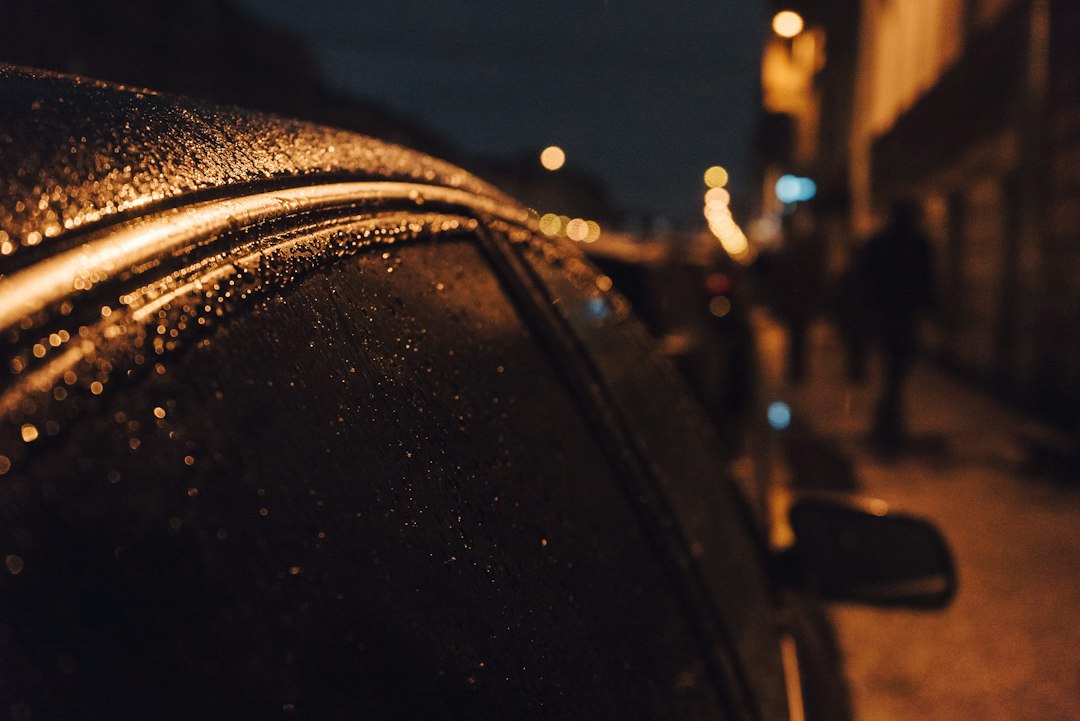
Su Xiaoman’s answer used to be the 7 a.m. alarm. Later she changed it—it was the sound of an engine, a muffled sputter, and then gone. Completely. On a curve. On a rainy night. At 11:20 p.m.
Because of that one “gone,” she remembers a person.
Three years ago, Su Xiaoman landed her first real job, doing design at an advertising agency, 4,300 yuan a month during the probation period. She gritted her teeth and bought a used white hatchback for 16,000—half a year’s wages, 14,000 of which she’d borrowed from her father. Her father said: “It’s a loan. Pay me back 500 a month. No interest—just reminders.”
An old car has an old car’s temperament: it burned oil; the radio picked up only one station, and it was opera; the fuel gauge wouldn’t budge unless you knocked it twice with a knuckle. Su Xiaoman found it all great fun. When you’ve just started working, everything is fun.
Fun, until that Friday night.
That day she worked overtime revising a proposal until eleven. The moment she left the underground garage, the sky opened up as if it had sprung a leak. She was even in the mood to hum—her first time driving alone at night. Felt like it deserved a little ceremony.
Passing Black Bear Slope, on a wide curve, the old car suddenly coughed twice, dipped its head, and went completely silent.
The headlights flickered twice and died. The steering wheel instantly grew heavy as a millstone. Su Xiaoman pressed the brake with all her strength, and the car stopped on the outside of the curve, half its nose sticking into the traffic lane.
Freight trucks roared past one after another, each one first shoving her rear with a gust of wind, then adding a long blast of its horn—the sound waves shook loose another layer of rain from the roof. Her phone was at 3 percent. She dialed her father, then hung up—two thousand kilometers away; what was the point of making him worry too.
Rain hammered the roof, boom boom boom, like drums.
She pulled on her raincoat, found the warning triangle in the trunk, and jogged over hunched, placing it five meters behind the car. Turning back, she walked straight into a pair of headlights.
A small pickup truck, piled high with leafy greens, so green they practically overflowed, leaves poking out through the mesh. The door swung open and out jumped a man in his fifties, water still streaming off his raincoat.
“Miss, did you set out that triangle?”
“Y…yes.”
“Too close. Move it fifty meters back. This is a curve—drivers don’t turn the wheel until they’re past it. Every second counts.”
She ran to move it. When she came back, the man had already pulled on a pair of rubber gloves and was circling to the rear of her car: “Push! One, two—go!”
Between the two of them they nudged the little white car to the roadside; her canvas shoes filled with water in a single step. The man straightened up and exhaled a puff of white breath, instantly scattered by the rain.
“Pop the hood.”
He shone a flashlight, reached in, and pulled out a rusted battery clamp: “There it is. The clamp was loose, and it’s corroded green. One bump on the road—snap—and it leaves you stranded right here.”
He fished pliers out of the door pocket, scraped the corrosion a couple of times with the back of a knife, tightened it back and forth a few rounds, then patted the hood with his gloved hand: “Try the ignition.”
The old car coughed twice—and came back to life. The headlights blazed on, the rain lighting up in their beams like a fan.
Su Xiaoman’s eyes went hot. She pulled out her phone to transfer him 200 yuan: “Sir, thank you so much, really—”
The man waved her off: “Miss, these hands of mine are for hauling vegetables, not taking money.”
He said his surname was Zhang, that people called him Vegetable Zhang, hauling a load from the wholesale market every night. A few years back, his truck had overturned right here on this slope, spilling half a load of chili peppers down the hillside. “The truckers passing by stopped, and six of them crouched in the rain helping me gather the peppers. Didn’t lose a single one. Didn’t crush a single one.” Ever since then, whenever he passed this curve at night and saw a car stranded on the roadside, he stopped.
“Then… then let me send you a red envelope! Just a small token—”
“This debt of yours, you can’t repay to me.” Uncle Zhang tipped his chin toward the road ahead. “Next time you see someone stranded out here, lend a hand. Pass it on—that’s the only way it gets repaid.”
Before leaving, he fished a brand-new pair of rubber gloves out of the door pocket and pressed them into her hands: “Keep these. Next time the car won’t start, you won’t freeze your hands. And get yourself a set of jumper cables for the trunk. An old car has its moods—you’ve got to learn to feel them out.”
The pickup truck melted into the curtain of rain, its taillights red for a long, long while.
Su Xiaoman drove the whole way home like an old ox out for a stroll. When she got there, she sat down on the ground by the door—only then did the fear catch up with her, her hands shaking too hard to line the key up with the lock. But somewhere in the shaking, she started to laugh—remembering those words: pass it on.
Three years on, Su Xiaoman is still driving that little white car. The radio still picks up only one station; the fuel gauge still needs a knock. She never traded it in. That car saved her once—she couldn’t turn her back on it now.
In her trunk, always: jumper cables, a flashlight, the warning triangle, and a pair of rubber gloves, washed spotlessly clean.
On a rainy night last year, she was crossing Black Bear Slope again when she saw a small car stranded at the roadside, hazard lights blinking. She pulled over, set out the triangle, handed over the gloves. The driver insisted on sending her a red envelope, but she waved her hand and heard herself say: “Forget the red envelope. Pass it on.”
The driver froze for a moment, then smiled—as if understanding.
“There was some fear afterward, but mostly, gratitude.” Su Xiaoman saved that line in her phone’s notes. She figured Black Bear Slope was the first lesson of her on-the-job training—textbooks don’t teach you about strangers, but someone once performed the whole lesson for her, in five minutes, in a rainstorm, with a pair of rubber gloves.
Now, every time she passes Black Bear Slope at night, if she sees a pickup truck piled with greens parked at the roadside, she honks twice.
Sometimes, that truck flashes its lights back at her.
Two beams of light touch in the rain, then each goes its own way. Like two people who never properly met, nodding to each other across the curve.
(The End)
Adapted from a true story. All names are pseudonyms.
Based on a true story