The Ferryman's Way
“Sir, could you wait for me a moment? One stick of incense.”
One stick of incense. City folk stopped saying those words long ago.
The speaker was an old lady, standing at the door of a flower shop, cradling a bundle of white chrysanthemums. The wind tangled her hair, and with both arms full she couldn’t smooth it down, so she let it be. The shop’s glass door swung open and shut, warm air washing over her in waves, but she didn’t go inside. She just stood there in the draft, eyes fixed on me, afraid I’d vanish if she blinked.
Go get it, I said. I’ll wait.
She tottered off, and came back with a tin tea canister added to her bundle. Its paint was chipped to a whitish sheen—clearly something she’d used for many years.
“It was his favorite,” she said. “The teacup at his grave’s been empty for a year now. I always make sure to fill it again.”
The order read: one bouquet of flowers, one canister of tea, Fu’an Garden Cemetery, western outskirts. The delivery app couldn’t parse the meaning of this order; it knew addresses, not longings. The way I saw it, this order was: a living person going to see a sleeping one.
On the way she chattered on. Her husband had taught at a middle school—taught physics his whole life, could explain any principle clearly, but when it came to himself, not a single thing he made clear. He’d said that once he retired, he’d take her to ride every route in the city, starting with the Number 4 bus, then the loop line. He never got the chance.
“Well then, today’s trip—we’ll say I took you to see the western outskirts,” I said.
She smiled a little, water glistening in her eyes, but she didn’t let it fall.
At the cemetery, she arranged the flowers, poured the tea, spoke to the headstone, her voice so soft it was as if she feared waking someone. Wind moved through the pines and cypresses with a rustling sound. I stepped back a few paces and didn’t rush her. Rushing wasn’t on the order slip. The sunset stretched the shadow of the headstone long and long, and then she rose, brushed the dirt from her knees, and smiled at me: “Sorry to hold up your business.”
“This order’s in no hurry.”
“And which order ever is?” She sighed, then smiled to herself again. “Your line of work—wind and rain, day in day out. It’s not easy.”
The ride back, the van was empty. The city lights were coming on, the long street turned to a river, headlights flowing into streams. I took the riverside road, in no hurry.
People call me Master Cheng. My surname is Cheng, with just the one character—Wei. Cheng Yiwei. The wei of “a single reed crossing the river.” My father gave me the name.
But first, my father.
My father was a ferryman on the river. One bamboo pole, one concrete boat, thirty-some years of poling. During flood season, when the current ran fast, he kept the bow pointed into the waves—that was steadier, he said. The rule at the crossing was: pay what you can. Porters, people visiting relatives, students—he’d wave them aboard. Water belongs to everyone, Father said. The boat lives off the water, so it can’t live off money alone.
Over his lifetime, Father pulled seventeen people out of the river. When someone came to his door with liquor to thank him, he’d wave it off: “The water pushed you to my boat. You were lucky. It’s not my doing.”
There was one young man he’d pulled out during flood season who later tested his way into school and went off to teach somewhere else. Now he comes back every year in the twelfth month—never calls on us, just walks a circuit of the old ferry crossing, mends the boat shed, sweeps the stone steps. Father’s eyes have gone dim; he hasn’t recognized him in years. He asked who he was.
“Just someone crossing the river,” the man said.
Father nodded and asked no more. The two of them would squat by the wall in the sun, sitting through whole afternoons.
The year the bridge went up, the ferry crossing was shut down. The last crossing was in the twelfth month, carrying a peddler with a shoulder-pole load. The peddler stepped ashore, Father tied up the boat, the water on his pole still wet. He ran a hand along the hull and said something to it—I didn’t catch what. On the walk home, he kept turning to look back.
The pole went up on the wall, like a lifetime of honors taken down. Sometimes Father would stare at it and say: “People crossing the river these days don’t even wet their shoes.” There was no bitterness in his tone. If anything, a kind of envy—envying the shoes.
The year I moved to the city, Father saw me off at the old crossing. People streamed back and forth over the bridge. He stood beneath the bridge piers and said: “Delivering packages and ferrying people—it’s the same thing. Carrying something from this side to that. Keep your hands steady, keep your heart level. When the water runs fast, the boat must not panic.”
Then he added: “Whether the ones who cross remember the boat doesn’t matter. As long as the boat remembers the water, that’s enough.”
I’ve carried those two sentences with me to this day.
I do same-city rush deliveries. Eight years now. One electric scooter, two insulated boxes, one rain poncho, and a thermos hanging from the handlebars year-round—when I meet elderly people or kids on the road, I pour them a cup of hot water. Others grab the high-paying orders; I often take the ones nobody wants: long routes, cold routes, cemetery runs, hospital deliveries in the dead of night. The roads are long and quiet, like getting out of town for a breath.
Helping out when I pass by, lending a hand where I can—that’s not because I’m especially enlightened. Half of it is what Father taught me, and the other half is an old debt. That debt comes later.
Around Cold Dew, sleet fell one night.
Two in the morning, an order came in, the notes field a mess, riddled with typos: “child fever 39.5 im the only one home no medicine please hurry ill pay extra”.
The last three words—“ill pay extra”—you could feel the trembling through the screen.
I picked up the medicine at the pharmacy. A route that usually took ten minutes was jammed that night—water pooling across the road ahead, barriers blocking the way, a detour adding two bus stops. I left my scooter at a convenience store, told the owner, and started running.
Wind stuffed sleet down my collar. I ran like wolves were at my heels. When I reached the apartment complex, the elevator was down for maintenance—ninth floor. I climbed, story by story. Around the seventh floor I thought: I’ve been a father all these years, and this is the first time I’ve hated my legs for being too short.
The door opened. A young mother, hair a mess, a down jacket thrown carelessly over her pajamas, hands shaking too hard to hold the medicine box steady. Inside, the child was crying, the cries already gone hoarse.
“Water,” she said. “I don’t have any water that’s cool enough to drink…”
I handed over my thermos: “It’s warm. Just right.”
She froze, took it, and the rims of her eyes went red at once. After giving the medicine, she sat by the bed patting the child for a good ten minutes until he fell asleep. She tiptoed out and pressed money into my hands—more than what the order said.
I pushed it back: “Whatever the order says. I can’t take more.”
She started to say something else, and I said: “I’ll head down. Don’t wake the child.”
Back at the convenience store, the scooter was fine. The owner’s wife handed me a cup of ginger tea from behind the counter: “You delivery folks have it rough.”
I thanked her. By the time that delivery was done, I was soaked through, but my chest felt like it had been warmed by a fire. That kind of fire can’t warm anyone else, only yourself—but oh, how warm it is.
Late summer, early autumn—I ran into another downpour.
I was riding empty past Dongguan Street when there was a clatter up ahead: a three-wheeled cart had tipped over into standing water, a cartload of watermelons rolling half a block. The old farmer chased his melons through the rain, slipping with every melon he caught.
I propped my scooter at the curb and charged in. Two students fresh out of school came running to help, the convenience store owner hauled out some empty crates, a woman in pajamas came out hugging an umbrella, holding it over whoever was nearest. A dozen or more people in the rain—rolling melons, righting the cart, gathering the broken ones. Ten-odd minutes, and the cart was back on its wheels, the good melons in crates, the cracked ones written off to the road.
Dripping head to foot, the old man picked the biggest melon and tried to force it on me. I refused; he chased me with it, huffing and puffing. Finally I said: “Grandpa, your handlebar ran over my crate just now. You owe me.”
He froze. The whole street burst out laughing.
In the end he stuffed the melon into my insulated box anyway. “A crate’s worth nothing. This melon’s sweet.”
That evening I cut it open at home. Sweet as anything. My son ate two slices in one go and asked where I’d bought it. I said I didn’t buy it—I picked it up in the rain.
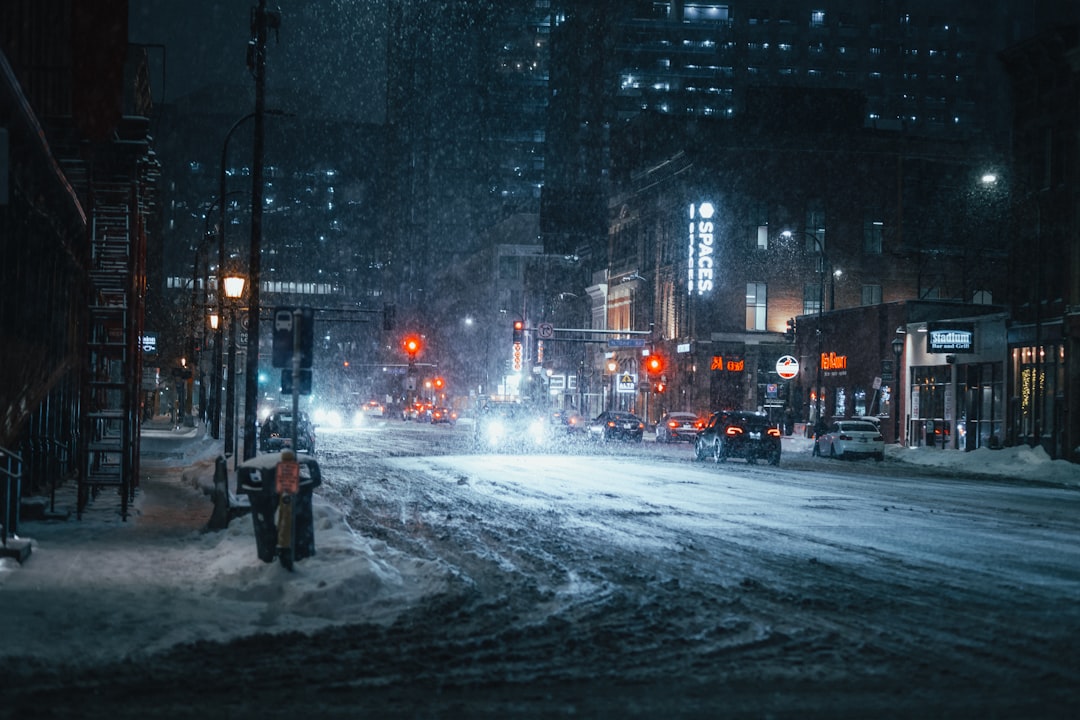
Light Snow, and a hard wind. The wind had scoured the city clean, the streets nearly empty, the trees stripped nearly bare.
An order came in. Pickup was a mailbox in an old residential complex in the south of the city; drop-off was in the north, across most of the city. The note had one line: “Must be handed to the recipient in person. Please wait until he opens it before you leave.”
The sender signed—a single name: Chen Xu. I glanced at the recipient. The same two characters.
A letter to himself, across an entire city.
The meeting point in the north was outside a convenience store. The light inside was a warm yellow, the glass fogged with condensation. The wind was fierce; I waited under the eaves. After half an hour, a young man arrived—his trench coat hung loose on him, thin, with clean, open features. He signed, didn’t hurry off, just stood in the wind opening the envelope, slowly, as if unwrapping something precious.
When he finished reading, he looked up and saw me still there. He looked a little sheepish. “Sir—you waited all this time?”
“The note said wait until you’d opened it.”
He folded the letter, slipped it into the inner pocket of his coat, pressed his hand over it, like tucking in something sound asleep. “This letter took me half a year to write. I mailed it three times and lost it three times,” he said. “Today it finally arrived.”
“Arrived is what matters.”
The wind swept dead leaves between us. “Thank you,” he said, “for not asking me why.”
I said: “The letter wasn’t heavy. Neither are you.” I paused, then added: “Standing in the wind too long is bad for your lungs. The subway station up ahead is warm. If you’ve got nowhere to be, head home early.”
He smiled. It was brief, but I saw it.
He tried to scan my code and buy me a hot coffee. I waved him off: “Save it for yourself. It’s cold out.”
He walked toward the subway entrance, and after ten-odd steps, his back straightened. A moment before, standing there, he’d been caved in.
I couldn’t guess what the letter said, and didn’t need to. Some people are a whole city away from themselves, and some things can only be said to the self on the other side. What I could do was carry that city’s distance for him.
That twelfth month of my own story came earlier than all these solar terms—twelve years earlier.
The first time I came to the city. The crew foreman had run off, three months of sweat money gone with him, and my wallet got sliced out of my pocket on a bus. The twenty-third of the twelfth month, Little New Year, seven yuan left in my pocket. I crouched under an overpass, watching the streams of headlights pour past below, pouring on without me.
A van pulled up in front of me. The window rolled down and a big brother leaned out, loud-voiced: “Young fella, know your way around? I’m headed to the cold storage in the west of the city. Point me the way and I’ll give you a lift—warm you up some.”
I knew the way, so I got in. The van smelled of machine oil mixed with a hint of roasted sweet potato, warm enough to sting your eyes. He asked a few questions; I answered haltingly. He gave an “mm,” no judgment, no sigh, just turned the heater up a notch.
At the cold storage, he unloaded and I helped carry. When we finished he fished two hundred yuan from inside his jacket, then pulled two still-warm steamed buns from under the driver’s seat, and pressed them all into my hands.
I said I’d pay him back next year, said I’d write him an IOU. He pushed my hand away:
“What IOU? You don’t owe me a cent. From now on, when you’re out on the street and you see someone in trouble—lend a hand. Every hand you lend, that’s one more payment.”
I asked his name. He waved, got in, and the van drove off. In the snow, two red taillights.
Those two points of red—I watched them for twelve years.
Two hundred yuan, I could repay ten thousand times over. But that sentence—that one I’ll be paying back my whole life.
On the day of Great Snow, the sky hung low and heavy, clouds pressed down flat.
The order was a bag of roasted peanuts, two jars of pickled vegetables, a pair of cotton-padded shoes. The recipient was a student at the normal university. On the sending end was an old man who couldn’t type, so over the phone he rambled out his instructions, asking me to write them up in the notes for him:
“Have him share the peanuts with his roommates—you can’t find any this fragrant in the city. The pickles go with rice. Make sure he wears the shoes, don’t let him save them. He keeps telling me on the phone his shoes are broken—I think he just can’t bear to buy new ones.”
I wrote it all down line by line. The old man added: “Sir, one more thing. When you see the boy, tell him for me—tell him to stop living on takeout. It’s hard on the stomach.”
At the school gate, the student came pedaling up on an old bicycle, took the bag, and stood there frozen for a long while.
“My grandpa…” He hugged the bag of peanuts to his chest. “He still roasts his own peanuts?”
“He does,” I said. “Your grandpa’s got a powerful set of lungs. On the phone he was louder than me.”
The student’s eyes went red. He lowered his head to untie the bag, then couldn’t bring himself to open it—both hands just kept clenching around it.
“Oh, right—your grandpa sent a message,” I said. “Stop eating takeout all the time. It’s hard on the stomach.”
The student burst out laughing, and somewhere in the middle of laughing, tears fell onto the bag.
He insisted on pressing a bottle of hot soy milk into my hands. This time, I took it. Refusing some things would trample the meaning behind them.
On the ride back I thought: a ferryman ferries people; I ferry things. But inside the things there are words, and inside the words there are people. Do this line of work long enough and you learn—no delivery in this world is just a delivery.
Winter Solstice, clear skies. The platform was handing out year-end “Good Samaritan” awards—ten riders chosen from tens of thousands across the city. I was on the list.
At the ceremony, they gave out a glass plaque, satisfyingly heavy. The crowd egged me on to say a few words. I said I wasn’t good at speeches, so I just quoted my father: “A boatman keeps no ledger.”
Laughter from the crowd. I didn’t laugh. I said I meant it. If a boatman recorded every soul he’d carried, every life he’d saved, the ledger would weigh more than the boat, and the oars would never move.
After the ceremony, a reporter chased me down: “Master Cheng, how many people have you helped over the years, just passing by? Is there a number?”
“No number.”
“Surely there’s a rough count?”
I thought about it. “As long as the water remembers, that’s enough.”
The reporter probably thought I was strange. I didn’t blame him. He was young—not yet at the age for putting down the ledger.
That evening at home, my son held the glass plaque up over his head and said it looked like a piece of ice. My wife came out of the kitchen wiping her hands, gave it a glance: “Will it pay for groceries?”
The whole family laughed. The plaque sat on the shelf at home for one night. The next day I tied a cord to it and hung it on my handlebars. Better ballast on the road than an ornament at home.
At red lights, it sways gently on the front of the scooter; when the sun hits it, it flashes. A fellow rider waiting at the light spotted it: “Brother, what’s the story with that?”
“Ballast.”
A boat carries ballast stone so it holds steady when the waves come. Good things aren’t meant for display. They’re meant for ballast.
Another twelfth month. At year’s end, the orders pile up faster than I can run them.
This day dusk came early—by four o’clock the sky had darkened, and the snow began. I finished my last delivery; the recipient was a little girl who shouted through the door: “Thank you, mister!” Her voice crisp as snapping rock sugar. Coming down from the stairwell, I found I didn’t want to leave just yet, so I wheeled my scooter up onto the river levee.
In the snow, the river ran gray-white, quietly eastward. Across the water, lights came on one district after another, patch by patch, and joined together they made a river too. Water above, lights along both banks. I thought: this river of lights flows through the city night after night—how many boats are in it? How many crossings?
My father is eighty now, and still often walks to the old ferry crossing. A few days ago on the phone he said: “The bridge lights up at night now too. People cross the river without wetting their shoes. Good.” Then he paused: “The water’s drawn back. Grass growing on the flats now. Very green.”
He didn’t say it was a pity. In his whole life, he has never once said it was a pity.
I was still thinking when, down on the street below the levee, in the pale glow of snow and lamplight, a young rider in work uniform squeezed his brakes and pulled over. An old man’s three-wheeled cart had tipped over, cabbages rolled everywhere. The kid righted the cart, picked up the cabbages one by one, and when he’d finished, retied the old man’s scattered ropes, nice and tight. Snow settled on his shoulders; white breath rose from his head.
He finished the ropes, straightened up, glanced around—and looked right at me on the levee.
I pressed my bell.
Twice.
He froze for a moment, then raised his hand and waved.
He didn’t know me, and I didn’t know him. But I knew what those two rings meant, and I expect he did too. On this street, with everyone running through wind and rain—I wasn’t the only one lending a hand after all.
My phone rang. New order: three kilometers away, a hot congee, the note reading, “Mom’s stomach hurts. Please hurry, sir.”
I accepted, pulled up my collar, and turned my handlebars toward the densest stretch of the river of lights. Snowflakes flew into my face and landed on the handlebars, melting the moment they touched. The glass plaque swayed gently at the front of the scooter, holding down the ballast.
The snow thickened. I thought of my name. Father said, a single reed can’t cross the river. But a million reeds woven together make a boat.
This river is full of boats, coming and going. Whether those who cross remember the boat doesn’t matter.
As long as the boat remembers the water, that’s enough.
(Based on true events. All names are pseudonyms.)
Based on a true story