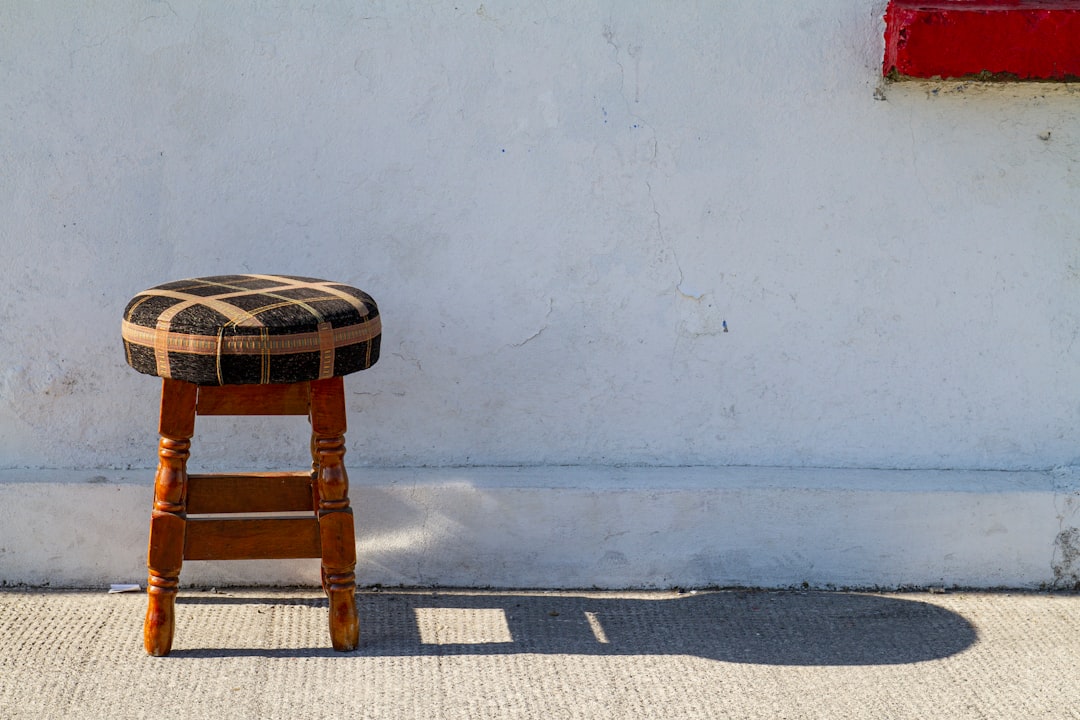
A Stool
A wooden stool, four legs, the middle of its seat worn pale. It has stood at the door of the shoe shop for thirteen years: moved half a foot out on sunny days, half a foot back on rainy days, its position never straying far.
Asheng doesn’t remember which year the stool was put out. He only remembers that in the shop’s third year, Chen Popo, the vegetable seller next door, stopped to rest at his doorway and sat on a stack of cardboard boxes. The next day, he carried out an old square stool from home. Later, the seat cracked once, and he replaced the board himself, hammering in nails close together. Old ladies buying vegetables sat on it, the street sweeper sat on it, children waiting for their parents after school sat on it. They sat a while and moved on; he never asked why.
August twenty-eighth, high noon, when the sun was at its cruelest. He was bent over polishing a pair of leather shoes when, from the corner of his eye, he caught a figure swaying on the curb across the street—an old woman holding a lunch box.
He didn’t have time to think. He grabbed the stool at the door and rushed over. The stool touched the ground first, and then his two hands caught her arms.
“Sit down, Po.”
The old woman sat. The lunch box in her hands stayed level—not a drop of soup spilled.
Teacher Wen was seventy-eight this year; before retiring, she had taught Chinese for thirty-six years. Her days were measured out step by step: home to hospital, nineteen hundred steps; hospital to home, nineteen hundred steps—two round trips a day, nearly ten thousand steps, she had worked it out. Her son Azhe had been bedridden since 2013. The family hired a caregiver for a few hours a day, but her son’s meals she insisted on delivering herself. By the time she arrived, the soup in the box would be just warm.
She had high blood pressure, an old knee injury, and her legs could give out without warning, like missing a step on a staircase. In the half second before she fell, only one thought filled her mind: don’t let the soup spill.
She didn’t fall. A stool landed a step ahead of her, and a pair of hands held her steady. She sat, caught her breath, looked up at this young man with shoe polish all over his hands, and suddenly remembered a phrase she had spoken a thousand times: Cherish the elderly of others as you cherish your own.
So the words from textbooks could walk out onto the street all by themselves.
That same day, past four in the afternoon, Asheng saw her again. Same lunch box, footsteps slow. When she reached the door, the old woman pulled a small red envelope from her cloth bag and, brooking no refusal, pressed it into his hand.
“Lai see,” she said. “For good luck. You steadied me—good fortune must come to you.”
The envelope was thin, just a few dollars. Asheng pushed it back three times and couldn’t. Her hands were small, but strong.
“This is the rule,” Teacher Wen said. “If others show me respect a foot deep, I return it ten feet. I taught school all my life—I can’t be the one to break the rules.”
In nine years, she had worn out many pairs of shoes. When a heel wore crooked, the cobbler knew her and refused payment. She wouldn’t take the favor; in the end she paid the full price and added two dollars more: “Troubling someone once is a kindness received. Making it a habit is a debt.”
That red envelope, Asheng couldn’t bring himself to open. He pressed it flat beneath the glass of the counter.
In the hospital room, Azhe saw the video on his caregiver’s phone. The image shook, the figures were small; it took him a long while to recognize that the retreating figure with the lunch box was his mother.
He was over forty. In all these years of lying down, it was the first time he had seen his mother through someone else’s eyes: a small, thin old woman, swaying for an instant in the sun, caught firmly by a stool. He thought, suddenly, that all these years as he lay here, it was as if an invisible stool had been beneath him, holding him up all along.
The caregiver said, your mom’s amazing—the whole city is helping her. He opened his mouth, but made no sound. His words could be understood only by his mother. When she came that evening, he recited the phrase he’d practiced all afternoon, saying it to her one word at a time:
“Mom. Good people.”
Teacher Wen smiled and tucked in the corner of his blanket: “Mm. Even a stool knows how to catch someone.”
The video was filmed by a passerby and spread through the city in three days. The one who filmed it said later that his hands had been shaking: “That stool—it ran faster than a person could.”
People from a charity found the hospital and brought a meal card, saying her meals would be ordered through it from now on. Asheng and his wife chose the lightest pair of crutches and brought them to the ward; Teacher Wen, unable to refuse, accepted. Two days later, several middle-aged people appeared at the ward door and bowed before entering—her students from more than thirty years ago, who had recognized their teacher from the video.
“Teacher Wen, do you remember me?”
“I do.” She thought a moment. “You wrote ‘My Dream’ back then. You wanted to open a little corner shop.”
The whole room laughed. The sunlight outside the window was lovely. A bouquet appeared at the son’s bedside, with no card.
There were young strangers too, who came to the shoe shop, set down a case of bottled water, and left—saying it was thanks to the owner on behalf of their hometown. Asheng chased after them, but they were already past the corner.
It was September now. The stool at the door of the shoe shop still stood in its old place. A fresh chip had appeared along its edge, from the day Asheng had rushed out with it. He never touched up the paint.
Later, a plastic stool appeared outside the dessert shop across the way, and beyond it the herbal tea stall set out two bamboo chairs. No one had consulted anyone; the street had simply grown, all on its own, many places where one could sit down.
The old people buying vegetables sat as before; the street sweeper sat as before. Teacher Wen sat too when she passed, resting a moment, trading a few words with Asheng before going on to the hospital. Someone asked whether she wasn’t tired, and she said: “Walking ten thousand steps is a mother’s duty. Others’ kindness to me is a gift. Duties must be kept; gifts must be repaid.” Once, she brought a small bag of dried tangerine peel she had sun-dried herself, for steeping in water to ease a cough. Asheng accepted it, then turned and pushed the red envelope under the counter glass a little deeper in.
The stool is still that same stool: half a foot out on sunny days, half a foot back on rainy days, its position never straying far. Only now, everyone who passes knows:
This stool—you may sit on it.
This story is adapted from real events; all names are pseudonyms.
Based on a true story