The Seed Knows Its Way Home
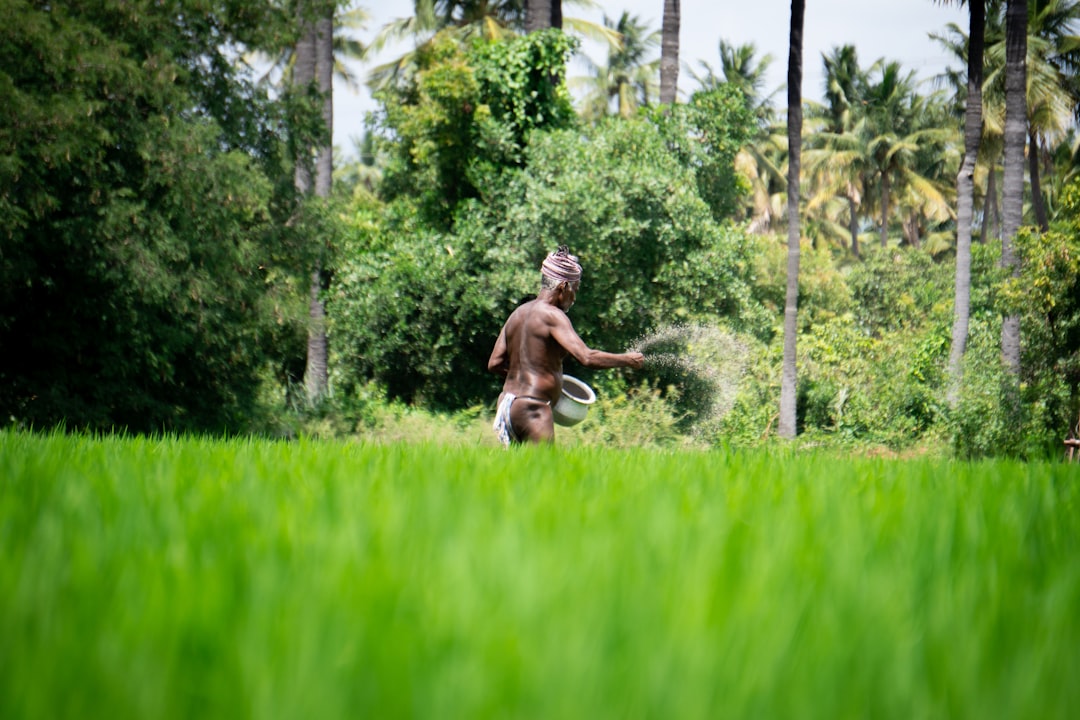
Before dawn had fully broken, the fog at the river mouth crept along the paddy fields. Musa stepped barefoot into the mud — cool, soft, like stepping into a sleeping river. Dew dropped from the rice leaves onto the back of his hand, one drop, then another.
He bent down to count the grains on a single ear of rice. One hundred twenty, one hundred twenty-one… He lost count, and gave up. He laughed out loud, startling a white egret.
Twelve years ago, Musa didn’t count grains of rice. He counted signal towers.
Back then he was in America, a telecom engineer. Glass towers, server rooms deep into the night — he sent the voices of countless people across the ocean in a single second. Colleagues would clap him on the shoulder: Musa, your fingers can make two continents speak to each other.
But every night, passing the restaurant on the corner, seeing plates heaped with white rice like little mountains, he would suddenly find himself unable to swallow. He thought of his childhood —
When he was a boy, rice was a guest that only festivals could bring. His mother would set a small pot of white rice on the table, serving the youngest sister first, then grandmother; when it reached him, only a thin layer remained at the bottom of the pot. The rice sack was printed with foreign characters no one could read. His mother said the rice had spent a month on a ship, coming from across the sea.
He asked his mother: We have rivers here, we have rain — why does rice have to come by ship?
His mother didn’t answer. She only tipped the last few grains from her bowl into his.
His little sister looked up and asked: Big brother, when can we eat rice every day?
He couldn’t answer that day. Many years later, on a bright street in a foreign land, he still couldn’t. He had fixed the phone lines of half the globe, yet couldn’t connect the road to a single bowl of rice.
The turning point came in a video. He saw Chinese rice seedlings sending up their first ears on African soil, the rice in the lens as green as the river in his memory. That night he couldn’t sleep, and at three in the morning he called his mother. The signal crossed the Atlantic; her voice sounded as if through a layer of water.
He said: Mom, I want to come home and farm.
The line was quiet for a long time. Then his mother said: The land has always been here. It’s been waiting for you.
The day he quit, his colleagues thought he’d gone mad. He said: Signals let people talk to people. Rice lets people talk to the land. My hometown hasn’t heard the land speak for far too long.
The first year after he returned, he nearly wept. The fields by the sea — the salt bit at the roots of the seedlings; the green he planted turned yellow within ten days. The village elders crouched on the ridges, shaking their heads: their ancestors had tried. This land couldn’t grow rice.
Musa wouldn’t believe it. At night he patrolled the water with a flashlight; by day he recorded the seedlings’ height in a notebook, filling a thick volume. Only the Chinese agricultural expert team stayed on as he did. The leader, Teacher Chen, was in his fifties, his skin tanned darker than Musa’s own. Chen taught them to dig channels, pressing the salt away layer by layer with fresh water; taught them to wake the seeds in seedbeds before transplanting them to the fields. Chen’s fingers were rough, yet when he set the seedlings in the earth, his touch was gentler than anyone’s — as if afraid of waking something.
During the rainy season that year, Chen’s mother passed away in Hunan. When the call came, he was watching the water at the edge of the field, and Musa stood right beside him, hearing him say only this: When this crop is harvested, I’ll go home and kowtow at my mother’s grave.
Someone urged him to leave at once. Chen looked out over the field of nearly ripe rice and waved his hand: We are all people. Everyone deserves a full bowl of rice. If my mother knew I stayed for this, she would not blame me.
The first true harvest came the second year. Golden waves of rice rolled from the riverbank all the way to the village entrance. On harvest day the whole village came, the sound of sickles and laughter and sparrows all tangled together. The elder who had shaken his head loudest walked at the very front, sickle over his shoulder. Musa’s mother scooped up a handful of new rice, held it to her nose, and the tears fell.
The new rice was served at the table — the youngest child served first, as always. His sister had grown up; she filled a bowl for herself, then a full bowl for their mother. For the first time, there was more rice in the pot than they could serve.
His mother said: This is rice we grew ourselves.
Musa said: Mom, we don’t have to wait for a holiday anymore.
This autumn, Musa was invited to China. In an exhibition hall in Changsha, he stood for a long time before a photograph. It showed an old man who had spent his life rooted in the rice paddies, sun-darkened, smiling like a child — his lifelong wish that hybrid rice would fill the fields of the whole world.
Musa wrote in the guestbook, stroke by careful stroke: Old sir, your words have already come true in the fields of my homeland. The children back home eat rice every day now.
The morning after he returned, he stepped into the paddy again.
Before dawn had fully broken, the fog crept along the fields, dew fell on the back of his hand, one drop, then another. At the edge of the ridge stood a few children — his new apprentices — bending down just as he did, counting the grains on a single ear of rice.
If you lose count, you simply stop counting.
Musa straightened up and gazed at the paddies stretching green to the horizon, and suddenly understood something: seeds are like people — however far they travel, they know the way home. They cross the great oceans not to leave, but so that more places on earth can become home.
The river glinted in the distance; the white egret came down, then rose again. In the new day, the rice had grown another inch taller.
This story is adapted from true events; all names are pseudonyms.
Based on a true story