Three Thousand Miles, One Family
Carrots, onions, cooking oil. The sounds these three things made in an iron wok—I had lived in Tanghu Town for thirty-two years, and I had never heard them before.
It was the third day after the floodwaters receded. The middle school had become a shelter, three hundred-some people living in the classrooms, the mud on the playground only just shoveled away. I was in charge of logging donated supplies, running around the playground all day, my arms tanned into two different shades.
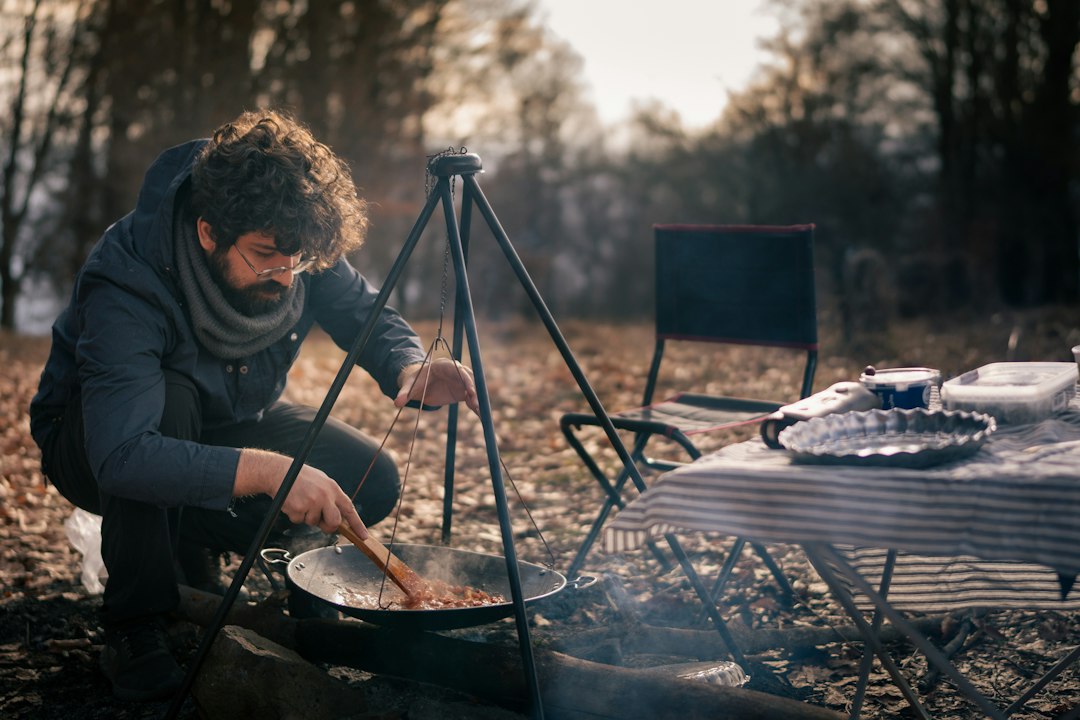
The big iron wok was borrowed from the Old Street Restaurant—a meter and a half across, normally used only to cook for the Mid-Autumn Festival banquets. Early that morning, no one knew who had set it up on two stone pedestals, firewood already stacked beneath. Nobody knew who had set up the wok, and nobody knew what was going to be cooked in it.
At noon a truck arrived, its hood coated in a layer of dust, as if it had come from very far away. And it had come from very far away—from Urumqi, more than three thousand kilometers. The driver’s surname was Ai, in his fifties, face dark and wind-reddened, his Mandarin stiff with an upturned inflection at the end. We all called him Uncle Ai.
The cargo came off piece by piece: four sacks of rice, two drums of oil, several boxes of beef wrapped tight in ice packs. “Over a dozen hours on the road—the meat’s still good.” He patted the boxes the way you’d pat a child’s back.
Later, piecing things together from our phones, we worked out his route: he had left Urumqi the night before and driven straight through to Nanchang. Netizens in Jiangxi had seen his journey posted online and lined up on their own to meet him along the way—some offered rides, some guided him through the city, some pressed hot water and naan into his arms. He hadn’t spent a single yuan on the whole trip. He told all this lightly: “It was on the way.”
The last two hundred kilometers of mountain road from Nanchang, Master Zhang, who ran freight for the town, took over. Master Zhang said that the whole way, Uncle Ai asked only two things: how many people were staying at the shelter, and whether the town could find a big enough wok.
He built the stove himself that same day. Refused all help—hauling bricks, mixing mud, his hands soon caked with mortar. Auntie Wang couldn’t stand watching, and handed him a straw hat. He took it, thanked her in a clumsy attempt at the local dialect, and set everyone around him laughing.
At four in the afternoon, the fire was lit. His knuckles were thick, calluses worn into the webs of his hands, and he sliced the carrots slow and steady. Onions into the oil, beef into the wok, rice spread on top, broth ladled over spoonful by spoonful, then the lid went on: “Rice needs to steam slowly. Can’t rush it.” Partway through he lifted the lid, picked out a few grains with the tip of a chopstick, tasted, and nodded. That first pot, it worked.
When the aroma drifted across the playground, many of the elderly stood at the classroom doors breathing in deep. A child asked what the dish was called. “Pilaf,” he said. “Eating it with your hands—that’s the tastiest way.” When he served it, the children’s bowls got a few extra raisins, ones he’d brought himself, because kids should have something sweet.
That evening, the whole town ate together on the playground. No tables, no benches—everyone standing, eating against the sunset. One little boy, having finished his bowl, shouted a new phrase he’d just learned at him: “Yakshi!”* Uncle Ai froze for a second, then burst out laughing, and the laughter washed away some of the exhaustion hanging over that whole field.
The first bowl, he carried to an old woman in a wheelchair. Her children lived far away; the night of the flood, a neighbor had carried her out on his back. He crouched down, set the box on her lap, snapped apart a pair of chopsticks and stood them upright in the rice—only then rose to tend the next pot.
Those days, he built the fire before dawn and cooked four pots a day. The wok cracked twice; Master Zhang drove overnight to the county seat for new ones. People tried to give him money—he waved them off. Someone brought eggs; he accepted half and returned half: “The pot doesn’t need these.” The half he kept went into that day’s rice.
At night, when the shelter quieted down, I brought him mosquito coils and found him crouching outside his tent on the phone, speaking his hometown dialect. I couldn’t understand a word, only caught one word recurring at the end of his sentences, his voice gone very soft. I didn’t interrupt—set down the coils and walked away.
He slept in a tent, his quilt folded square and sharp-cornered. Later someone recognized it: that’s how you fold it in the army. When asked, he deflected: “Just got used to it.”
The story of the students he sponsored was dug up online by a reporter from the provincial capital: for over twenty years he’d grilled lamb skewers away from home, and most of what he earned he’d sent to children in the mountains—hundreds of them over the years—and he’d even set up a scholarship fund. When the reporter asked why he had come this time, he said only one sentence.
That sentence spread through every phone in town the next day: “No matter how far the road, we are one family.”
My logbook recorded his supplies: four hundred jin of rice, one hundred jin of oil, two hundred jin of beef. There was one more column, which I’ve left blank to this day. Some people had glimpsed him slipping envelopes into a few households, then walking away, forbidding anyone to tell. When I asked him about it, he tilted his head toward the wok: “Rice is about to burn.”
Of course the rice didn’t burn. He watched that fire more carefully than he watched himself.
He stayed six days. On the seventh morning, the wok on the playground was already scrubbed clean and turned upside down on the stone pedestals, and the truck was gone. Master Zhang said he’d left before daybreak and wouldn’t let anyone see him off: “The fields are waiting. You all have your own work to do.”
What he left behind was tallied later: one newly bought wok, half a sack of rice, a cleaver with its handle wrapped in tape. And on the back wall of a classroom, in chalk, four crooked characters written by some child: “Come back, Uncle Ai.”
In autumn, the town’s rice ripened. When the new harvest came in, Auntie Wang took the lead and mailed a small bag to Urumqi with a note pressed with the handprints of the whole town. On the shipping slip, in the recipient’s line, all we knew was a surname. We thought for a long while, then wrote: “For Uncle Ai.”
They say he received it. They say he sent word that next year, he’d come back to cook the rice again.
Those two “they says”—I am willing to keep believing them. Three thousand kilometers away, there is someone who wonders when our rice will ripen, just as we remember how, before that autumn, the aroma of one pot of rice drifted across a playground, and a crowd of people standing around a wok suddenly became one family.
*This story is adapted from real events. All names are pseudonyms.
*“Yakshi” (亚克西) means “wonderful/great” in Uyghur.
Based on a true story