He Is Kind-Hearted
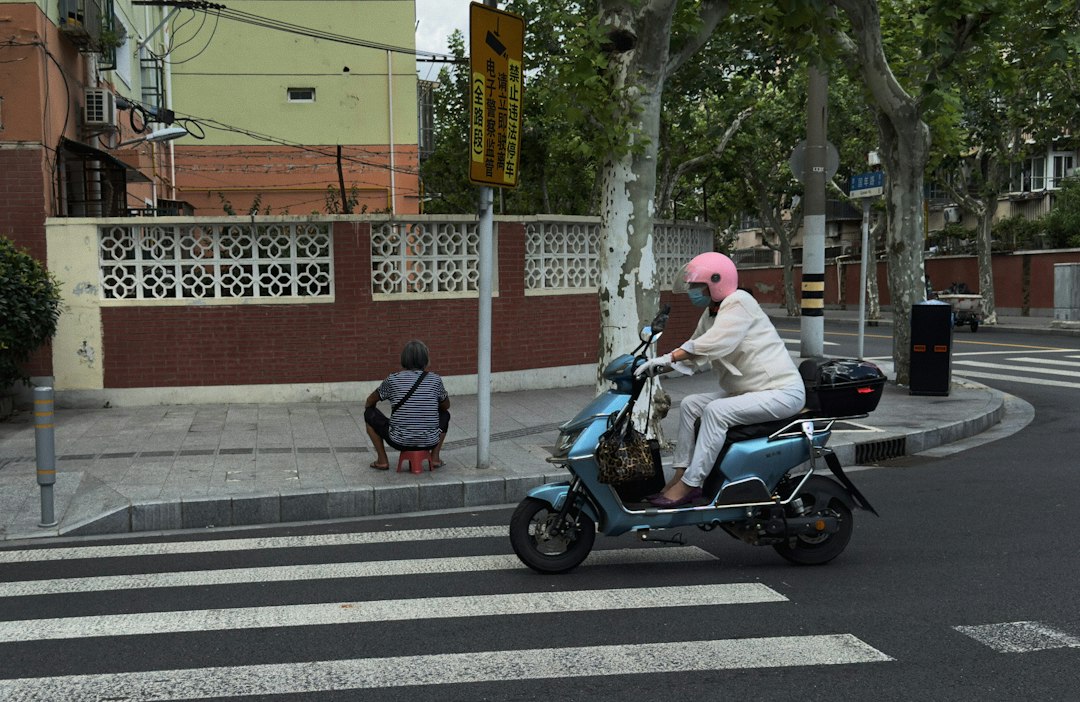
On a late-September morning, a faint chill already hung over the Guangfu Road intersection. My rice cake stall had stood at the southwest corner for eleven years, the red glow of charcoal in the stove shimmering against the white steam rising from the soy milk pot. Lately I’d picked up a new habit: while flipping rice cakes, I’d count the stickers on the electric scooters passing by.
Red backgrounds, yellow letters, one pressed against the next, from front to back, as if the scooters were dressed in flowered cloth. Look closer, and they were “Baby Come Home” search stickers, printed with photographs of missing children, their names, and a phone number.
By the time I counted the seventh one, a young mother with her child stopped at my stall. The little one pointed at a scooter receding in the distance and asked what all those colorful things were. The young mother couldn’t answer either.
I said, that one I know. It’s a long story—starts with a noon, half a month back.
September eighth, midday. I remember it clearly, because I had just brushed open my first pot of sauce that day. The sun was brutal, the asphalt softened by the heat, the white paint of the crosswalk almost blinding.
Just past eleven-thirty, there came a dull thud on the crosswalk. An elderly man with white hair had fallen, face down; a pool of red quickly spread beneath his nose.
People at the intersection swarmed over, then all stopped three steps away. No one dared reach out. I was gripping my sauce spatula, my feet inching half a step forward. Truth be told, in that moment my heart was pounding too: these days, what if…
Right then, a scooter that had already ridden past suddenly braked—red taillight flaring—swung around in a small arc, and came back. A young man jumped off. Blue helmet, bulging insulated delivery box, still a baby face. I later learned his name was Xiao Yang, from Zhaotong, twenty-four years old, two years running deliveries in this area.
Before he’d even steadied himself, he crouched beside the old man, hand hovering above his shoulder, not daring to press down. He asked first: “Sir, can you hear me? Where does it hurt?”
The old man couldn’t form words. Blood dripped from his chin onto the crosswalk.
Xiao Yang glanced down at the man’s curled-up leg, studied it a few seconds, and said: “Might have broken something. We can’t move him. Wait for the ambulance.” Then he turned and shouted to the crowd: “Please, someone call 120!”
His own phone buzzed insistently in his delivery box. I knew what that sound was—overdue orders, one after another, demanding their due. He pulled it out, glanced at it, declined the calls, then simply switched it off. He crouched back down and fanned the old man with his hand.
I called to him: “Young man, come have some water.” He waved me off. For those ten-odd minutes, he just crouched there, the back of his shirt soaked through, dark patches blooming across the fabric.
When the ambulance arrived and the medics lifted the stretcher, he trotted two steps to follow. I called after him: “Your orders!” Without turning his head: “Not delivering them!”
Later I heard that at the hospital, as the nurse cleaned his wounds, she asked the old man the usual question: “Did he hit you?”
His nose swollen high, the old man waved his hand vigorously: “No, no. He’s kind-hearted. I fell myself.”
Three days later, a middle-aged man came to my stall holding a silk banner of gratitude, asking about the delivery rider. I pointed him to the station. He said the old man had fractured his nasal bone and cracked a rib, and the doctor said another delay would have been dangerous. He also said that his father’s words in the hospital room—“He is kind-hearted”—had turned everyone’s eyes red.
Xiao Yang came back for rice cakes on the evening the banner was delivered. I tried to add an extra egg for him; he flatly refused, so I pinned his hand down and brushed on the sauce, and only then did he stop dodging.
I asked him: “That day—were you scared?”
He bowed his head and took a bite of rice cake. After a long while, he said: “Auntie, yes. I was scared. Anyone who says otherwise is lying. Orders piling up on the bike, and what if something happened I couldn’t explain away… But if I hadn’t helped, then every time I passed this intersection for the rest of my life, my heart would snag on it.”
He told me that in his first year on the job, the weather was just like that. A rainy day, over by Luosiwan—he’d skidded five or six meters, bike and all, and a whole box of spicy hot pot dumped across the street, chili oil running down half the road. He sat in the rain in a daze, elbow smeared with blood, as scooters swerved past him one by one.
It was an old rider named Lao Zhou, who’d been on the job for years, who stopped. Lao Zhou helped him under an awning, then rushed out to deliver his remaining orders before they timed out. When he came back, he was carrying a fresh order of spicy hot pot—paid for out of his own pocket. Lao Zhou said only one thing: “We’re all out here on the road. Who hasn’t taken a fall?”
Xiao Yang said that night, lying in his rented room, he thought: in this life, everyone gets a moment when the world gently catches them. And if you’ve been caught, you want to reach out and catch someone too.
So he began printing the search stickers with his own money. The first batch was several thousand, costing nearly three thousand yuan—almost a full month of his savings. He handed them out to every rider he met: at the stations, waiting for orders at intersections, crossing paths at traffic lights—he’d help them stick them on the front of their bikes. The stickers carried photos and phone numbers of missing children. Every delivery run meant one more pair of eyes scanning the streets.
Some people called him a fool. He didn’t take offense, just smiled: “Keep riding, and maybe one day, some child finds their way home.”
By this September, more than three hundred riders in Kunming were following his lead with the stickers. Even the delivery platform tracked down his station, rescinded that noon’s late-delivery fines, and gave him an honor: “Pioneer Rider.”
When the young mother finished listening, she said nothing for a long time. Past the traffic light, she took out her phone and snapped a picture of a scooter covered in stickers.
That night as I packed up, I counted: twenty-three stickered scooters had passed my stall that day.
At dusk, Xiao Yang’s scooter pulled up beside my stall. A new helmet hung from the handlebar. On the front, the corner of a sticker had curled up; he reached out and smoothed it flat, gently, the way you’d stroke a child’s head.
I wrapped two rice cakes for him—this time I wouldn’t let him refuse. He pushed off into the stream of traffic, and the light at the intersection turned green just then, a line of stickered taillights blinking, moving forward.
Standing by my stove, I thought again of the old man’s words—He is kind-hearted.
Yes. Kindness doesn’t fall from the sky; it’s passed hand to hand. Lao Zhou handed it to Xiao Yang, Xiao Yang caught the old man in his turn, and now more than three hundred scooters, carrying the faces of missing children, are passing that hand on—to every road in this city.
This story is adapted from true events. All names are pseudonyms.
Based on a true story