The Neighbor Across the Time Zone
“Appendix surgery—how much does it cost where you are?”
Ohio. A small diner, a January afternoon, not a single customer in the place. Maggie typed the English sentence into a red app she’d just downloaded, hit send, and got up to refill the coffee at table three.
She’d been holding that question for three weeks. A bill for $1,100 was stuck to her refrigerator door, pinned under a magnet. Insurance had covered part of it; she still owed $2,900, fifty dollars a month, and she’d been paying for almost three years.
The app she’d used for six years had announced it was shutting down. Every shop on one street was moving to the next street over, and she’d moved with them. The new place was a wall of square characters she couldn’t read a single one of. Heart clenched, she let the translator open her mouth for her.
Liuzhou. Three in the morning.
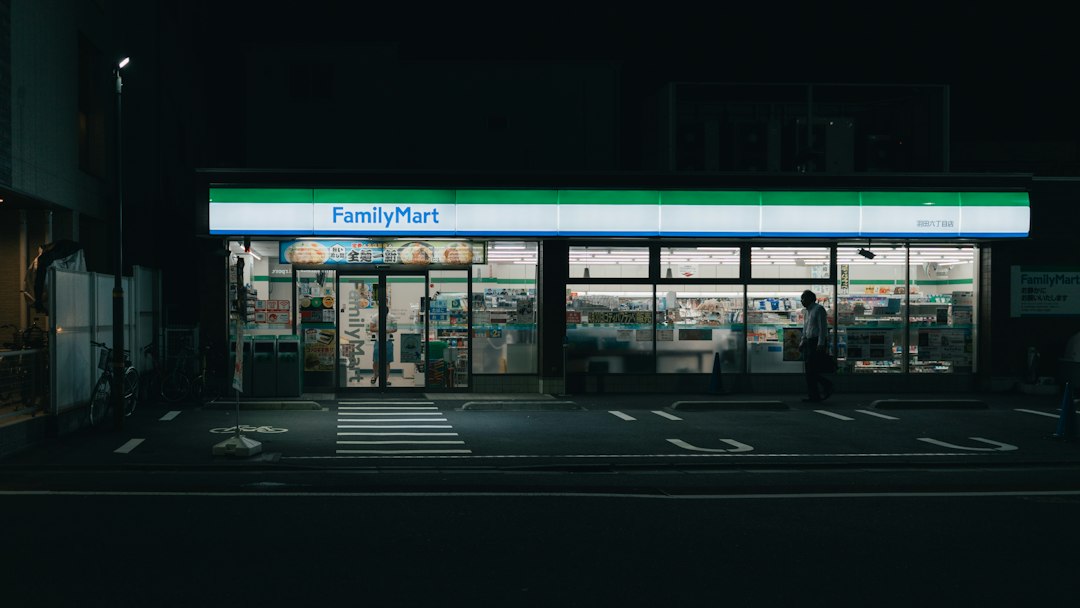
Xiaoman, working the night shift at a convenience store, was stocking rice balls on the shelves. Word was that overnight, hundreds of thousands of new faces had flooded into the app—a riot of avatars, screens full of English. She’d handed her high school English back to the teacher at graduation, but the translator worked fine.
Someone was asking about appendix surgery.
She answered with her brother’s bill: removed last spring, five days in the hospital, a little over nine thousand yuan all in. After insurance, they’d paid about three thousand out of pocket.
Three minutes later, a string of exclamation marks exploded from the other side.
And so the ledger began. Later, people would call this great migration “reconciling the accounts,” but the two of them didn’t know that then. It just felt like two neighbors passing a ledger back and forth over a fence.
Rent. Maggie’s one-bedroom: $1,150 a month. Xiaoman’s two-bedroom: 2,200 yuan a month.
Wages. Maggie made $2,300 a month; Xiaoman, just over four thousand.
Eggs, gas money, phone bills—receipts flying back and forth across the Pacific. Maggie photographed the paper on her fridge; Xiaoman dug out her brother’s discharge summary. Beneath each bill, hundreds of comments queued up in English and Chinese: rent where we live is… having a baby cost us… as if the whole world had opened its drawers at once to show each other.
After sending, both of them paused for a few seconds.
Only the storyteller knows that in that moment they were thinking the same thing: on either side of the earth, everyone was being chased by their bills.
Neither had won. Neither had lost.
Maggie spoke first, as always: “At least I’m alive. Just not sure whether $2,900 is a good price for a life.”
Xiaoman stared at the sentence for a long time, then replied: “Good price. People are the most expensive thing there is.”
That night, Maggie stayed up two extra hours.
Xiaoman told her there was a rule in this place: pay the cat tax at the door. Five minutes later, an orange cat came crashing through—fat as a loaf of bread, named Cookie. Xiaoman answered with a black cat, a lump of coal come to life, named Briquette.
Maggie sent a photo of the diner’s burger, the patty absurdly thick. Xiaoman dug out her post-shift breakfast: a bowl of luosifen, sour bamboo shoots buried under chili oil.
“What does it taste like?” Maggie asked.
“Smelly. Very delicious.”
“Once our town gets an Asian market, I’m buying some. I’ll boil it outside in the yard first, in case the neighbors call the cops.”
Xiaoman translated the sentence into Chinese, read it once, and laughed until the freezer hummed.
Xiaoman admitted she’d wondered what it would be like to earn twice her salary. Maggie admitted she’d wondered what it would be like to pay half her rent. They clinked glasses across the screen: one iced Americano, one bowl of luosifen broth.
“Honestly, I was scared, before all this,” Maggie said later. “I was afraid you wouldn’t like me.”
“Honestly, so was I,” Xiaoman replied. “I was afraid my English was so bad you’d find me tiresome.”
Two women, facing their screens, let out a breath at the same time.
Life’s hard everywhere. You get on with it.
Later, the two kids met too. Xiaoman’s son Doudou, six years old, went red in the face at the screen and managed a “Sank you.” Maggie’s daughter Lily, missing a front tooth, answered “Xie—xie—” with the fourth tone flying clean off into the sky.
Both mothers took screenshots.
The real test came two weeks later.
Maggie was on the evening shift. On break, she pulled out her phone—the old app had gone dark. Every lamp on the street, snuffed out just like that.
Her hands went cold.
It wasn’t about losing that light. It was that it hit her all at once: Xiaoman existed only in this red place. If this place vanished too, where would she find someone else—someone who taught her to boil luosifen, who showed her Briquette, who worried about whether her neighbors would call the cops?
She rushed back, fingers shaking.
The red app was still lit. Pinned at the top, a message from two hours earlier:
“You there? Has it gotten dark on your side yet?”
Maggie stared at the words. It was five in the afternoon where she was; in Liuzhou it was six in the morning—this woman had just come off a night shift, hadn’t slept, and had knocked on her door first.
“I’m here,” she typed. “Not going anywhere.”
“I know,” Xiaoman replied. “If a light goes out, you just move to another shop. People don’t get lost.”
A few seconds later, another message: “We’re neighbors. A little farther apart—across a whole ocean and a whole page of time zones—but still neighbors.”
That night they traded every way they could to stay in touch. It didn’t take long, because it seemed everything that needed telling had already been told.
What came after wasn’t anything earth-shattering.
Maggie found the Asian market. The luosifen really was boiled in the yard; the neighbors didn’t call the cops—they asked if they could have a bowl too. At year’s end she paid off her last bill, and the day she tore that paper off the fridge, the first photo went to Xiaoman. Xiaoman enrolled Doudou in an English class, and the first full sentence he learned was “My cat is fat”—about the family Briquette.
Neither of them ever said the word “meet.” Never said it—but both had thought it. Thinking it was enough.
There’s a picture like this: six in the morning in Liuzhou, the soy-milk shop frying its first batch of dough sticks, Xiaoman off her night shift, queuing with her breath fogging white; the same sun sinking into Ohio, Maggie driving to her evening shift, sunset burning in her rearview mirror.
The sun never went anywhere. It just circled from one person’s yard to another’s, lighting both sides up just as bright.
A new message popped up on the screen, from Maggie: See you tomorrow.
Xiaoman replied: 明天见.
What’s a time zone, anyway. Dawn comes early in some places and late in others—but tomorrow is the same day.
(This story is adapted from real events. All names are pseudonyms.)
Based on a true story