The Door Was Unlocked
When the red light on the recorder came on, Vera was pouring the second round of water into the teapot.
In the autumn of 2011, two young people from New York sat in her kitchen and asked her a question she’d been asked many times before: “September eleventh, ten years ago—do you remember that day?”
Vera remembered. What she remembered wasn’t the television. It was the sky.
◆
September 11, 2001, morning. She was in the backyard picking beans. On the radio they said Canadian airspace had closed completely—all flights were to land where they were.
What kind of place was Gander? A pinpoint on the map, no bigger than the eye of a needle. In the early days, every plane crossing the Atlantic refueled here. Then planes stopped needing to stop, and the town was forgotten by the world.
That afternoon, the world remembered.
Thirty-eight passenger planes, one after another, bore down on that single runway. Vera stood on the elementary school playground counting, and lost count somewhere past nineteen. Some people drove toward the airport to look, and came back saying: there are still more up there.
The whole town numbered ten thousand. That afternoon, sixty-seven hundred strangers descended from the sky.
◆
Hassan had been sitting in his seat for the better part of a day.
The announcements came in three languages, all saying the same thing: wait. Outside the window was gray tarmac, green hills—a stretch of land whose name he couldn’t pronounce. He was forty-one, from Cairo, come to New York to pick out fabric for his brother’s wedding. Now he and his suitcase were locked inside a cabin with several hundred other people, going nowhere.
The elderly Canadian woman beside him offered him half a biscuit. He shook his head—then, after a thought, took it. Neither of them spoke the whole way.
Toward evening, the cabin doors opened. A row of school buses waited at the foot of the stairs, and beside the buses stood a row of people in raincoats, holding thermoses and cardboard boxes. Someone called out: water first, something hot to eat first—come with us.
Hassan would think of that image for years afterward: a whole town of ordinary people, facing sixty-seven hundred strangers still shaking with fear, lifting the lids off their pots one by one.
◆
The first night, every light in town was on.
The school gymnasium was covered in mattresses. In the church pews slept bankers in pressed suits. On the fire station floor lay mothers cradling their babies. Someone cooked an enormous pot of moose soup, and the passengers took turns tasting it, with every expression imaginable.
Vera carried blankets through the gymnasium. She noticed a tall man standing against the wall, neither taking a mattress nor speaking, as people glanced at him. She walked over and pressed a stack of blankets into his arms. “Give us a hand? We’re short of people upstairs.”
The man blinked—then caught them.
That night when she went home, she put the spare key under the doormat. She still had two empty rooms in the house—just in case. The door had to stay open, whatever happened.
Later she heard that the pharmacy had gone mad with rush. Insulin for diabetics, medication for heart patients—the pharmacist dispensed them name by name off the passenger manifests, without taking a cent. When someone asked him why, he said: they’re terrified. Somebody has to take care of them.
The bakery’s lights were still burning at three in the morning; by eight, the bread was gone.
◆
At five the next morning, Hassan couldn’t sleep. He came downstairs and found the old man from the boiler room already heating water, and two girls chopping potatoes, awkwardly.
He rolled up his sleeves. “Let me.”
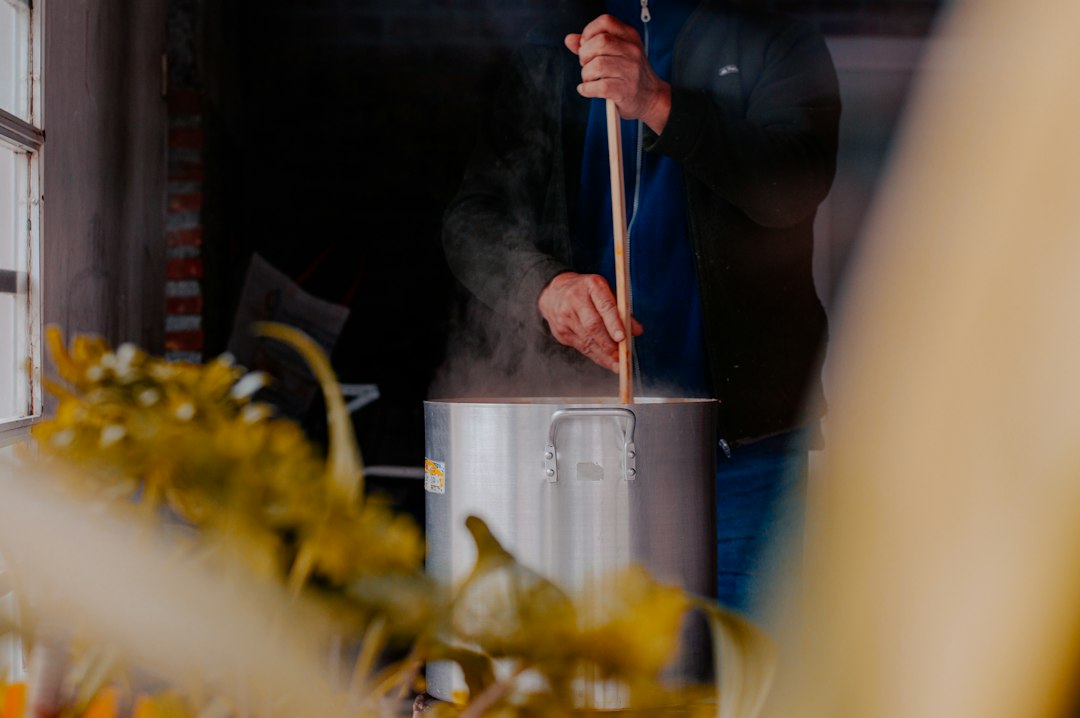
He cooked one pot of rice for three hundred people—rice, lentils, macaroni, drowned in dark, caramelized tomato sauce. A five-cent street dish from Cairo, scaled up two hundredfold. When the meal was called, the Indians came following the smell, the Irish came, the Americans came carrying empty plates—and everyone finished by asking: what is this?
“Koshari,” he said. “From my hometown.”
In those days he chopped a hundred kilos of potatoes and slept less than ten hours, busier than he’d ever been in his shop back in Cairo. But busyness had one advantage—no time to be afraid. The news played the same disaster over and over, and he knew what his face, his accent, might call to mind. But in that kitchen, no one asked about that. People only asked: one more scoop?
◆
The third day. The fourth. The fifth.
A retired school bus driver threw his vacation luggage out of the trunk and replaced it with “people off the planes,” running route after route. The barbershop gave free haircuts. The veterinarian went out to the airport and walked the cats and dogs from the cargo holds, one by one, giving them water. At one house, the shower was scheduled by the hour.
Vera’s phone became a public phone, and people lined up to call home—London, Cairo, Bombay. She sat nearby and listened, to people weeping in a dozen languages, then laughing in a dozen languages. Before hanging up, nearly everyone said the same thing: the people here treat us like human beings.
On the fifth night, it was Hassan’s turn. He dialed his mother and spoke Arabic that Vera couldn’t understand—but she understood the last sentence, because that word is the same in every language: “Mama, I’m fine. I’m staying with good people.”
◆
On the sixth day, the skies reopened.
The airport was full of people crying into each other’s shoulders. Before boarding, the sixty-seven hundred left behind a list a full page long: one person left money for the fire department, another left a box of phone numbers; in the years that followed, someone sent college scholarships to the town’s children, year after year. One line on the message board was read aloud for many years after: We owe you a hot meal, a good night’s sleep, and a lifetime.
Hassan stood at the end of the line. Just before the gate, he suddenly turned, walked back against the current, and pressed a slip of paper into Vera’s hand.
On it was an address in Cairo, and one line in English: My door is unlocked too.
◆
The red light on the recorder was still on. The young people pressed on: “So what do you think you all were doing, those days?”
Vera pushed two cups of tea across the table.
“Nothing special. That day the whole world closed its doors. The doors here—” she shrugged, “were never locked to begin with.”
One of the young people smiled. “We’re going to write a play. We’ll name it after the old saying here. Come From Away.”
Vera nodded. “Those five days, there were no strangers from far away. Only people who had come through the door.”
After seeing the two young people out, she passed the refrigerator. Ten years of postcards were pinned to the door; the topmost one had arrived just last month: a courtyard in Cairo, a tall tree, and beneath it a little girl in a school uniform, standing on tiptoe reaching for the oranges on the branch.
On the back, one line in English she’d long since learned to read: Everyone is well. Your bed is always ready. The door is unlocked.
Vera set the kettle back on the stove. Before the water could sing, she went and checked the front door one more time—
Unlocked.
(This story is based on true events; all names are pseudonyms.)
Based on a true story