Hold On · Chapter Twelve: Hold On
“Dad, you sewed it crooked.”
“Crooked is fine, as long as the spirit’s straight.” Chen Dashan’s hands didn’t stop, a rubber band clamped between his teeth. He’d been practicing this braid for two years—crooked at first, then straight, and crooked again this morning. His hands were shaking. It wasn’t the hands. It was the sky.
Six-thirty, seventh floor of the inpatient building. Outside the window the sky had just cleared to full daylight, sparrows hopping on the air conditioner unit. Tiantian sat on the edge of the bed in her hospital gown, legs too short to reach the floor, swinging back and forth.
“Dad.”
“Mm.”
“I’m scared.”
Chen Dashan’s hands paused. He gathered the last tuft of hair, wound it tight, then crouched down to meet his daughter’s eyes.
“If you’re scared, be scared,” he said. “When the scared is done, you still have to hold on.”
Tiantian nodded. At eight o’clock sharp, the orderly came for the bed. As it rolled toward the elevator, Tiantian reached out from under the sheet and made a gesture at him: five fingers loosely gathered, as if pinching a bottle cap, wrist giving a little twist.
Chen Dashan stood where he was, watching the bed enter the operating room, watching the door close.
He stood there a long time before he noticed the rubber band still between his teeth.
The corridor bench slowly filled up.
Sister Zhao had come at a quarter to eight, setting a soy milk and youtiao down beside his hand: “Eat.”
“Can’t eat.”
“Eat.” She pushed the youtiao into his hand. “If you go down, who signs for her?”
Chen Dashan took a bite and tasted nothing. Sister Zhao sat beside him and suddenly said, “Back when my old man was in the hospital, I kept watch in a corridor for forty days straight, and anyone who tried to talk me out of it got bitten.” She paused. “Later I understood—if someone had shoved a youtiao into my hand back then, it would’ve cut the suffering in half. Eat.”
Uncle Kang arrived at eight-thirty, apron still on, chest dusted with flour. On the shop door hung a sign: “Closed today—family celebration.” When someone asked what celebration, he glared: “My goddaughter’s having surgery. What else would you call it?”
Xiaofei came too, raised his phone halfway, then put it down.
“No filming today, Feige,” he said. “Some things just live in the heart.”
Station Chief Zhou had arranged his routes for him with a single sentence: “Today you have no other work. There’s tea steeping at the station. Pour yourself some if you’re thirsty.”
Chen Dashan sat on the bench and fished a piece of paper from his chest pocket. Folded in four, edges worn soft. He unfolded it, read it through, folded it back. A while later, he took it out again.
The letter was written last night. Written three times.
“Tiantian:
Your dad doesn’t know how to write letters, so make do. The doctor said the surgery takes four or five hours, and your dad can’t sit still, so I’m writing this.
Don’t be scared once you’re in. One shot of anesthetic, one sleep, and it’s over. If you’re thirsty when you wake up, don’t gulp—small sips first.
There are some things your dad can’t say to your face, so I’ll write them down.
First: now that your heart is fixed, when you see someone in trouble, give them a hand. Not to repay anything. Heaven gave this life back to you for a reason.
Second: you keep asking why Dad always says ‘hold on.’ The year I apprenticed with my master, he told me: when boiling noodles, it’s not the boiling water you fear, it’s the timing not being ready. Lift the lid too early and the noodles come out raw in the middle. Holding on isn’t gritting your teeth—it’s when the water boils, you still give it a moment.
Third…”
The third line was half written, then crossed out. Written again, crossed out again. Two black blots on the paper, the ink bleeding through to the back.
Then, on a fresh line:
“Forget it. Two is enough. Call for Dad when you wake up.
Dad”
At ten in the morning, Uncle Kang went downstairs and bought a bottle of ice-cold cola, pressing it into Chen Dashan’s hand: “Here. For when Tiantian comes out.”
Chen Dashan held that bottle all morning. Beads of condensation ran down between his fingers and into his sleeve, cold.
At eleven forty, the doors of the operating room opened. The doctor pulled down his mask as he came out: “Went very smoothly. The deformity was corrected cleanly—the child’s heart is beating strong.”
Chen Dashan didn’t catch it all. He only heard the word “smoothly,” and his legs went soft; he caught himself against the wall.
Uncle Kang, a fifty-two-year-old man, was the first to turn away and wipe his face. Sister Zhao still held half a youtiao in her hand, tears dropping plip, plip.
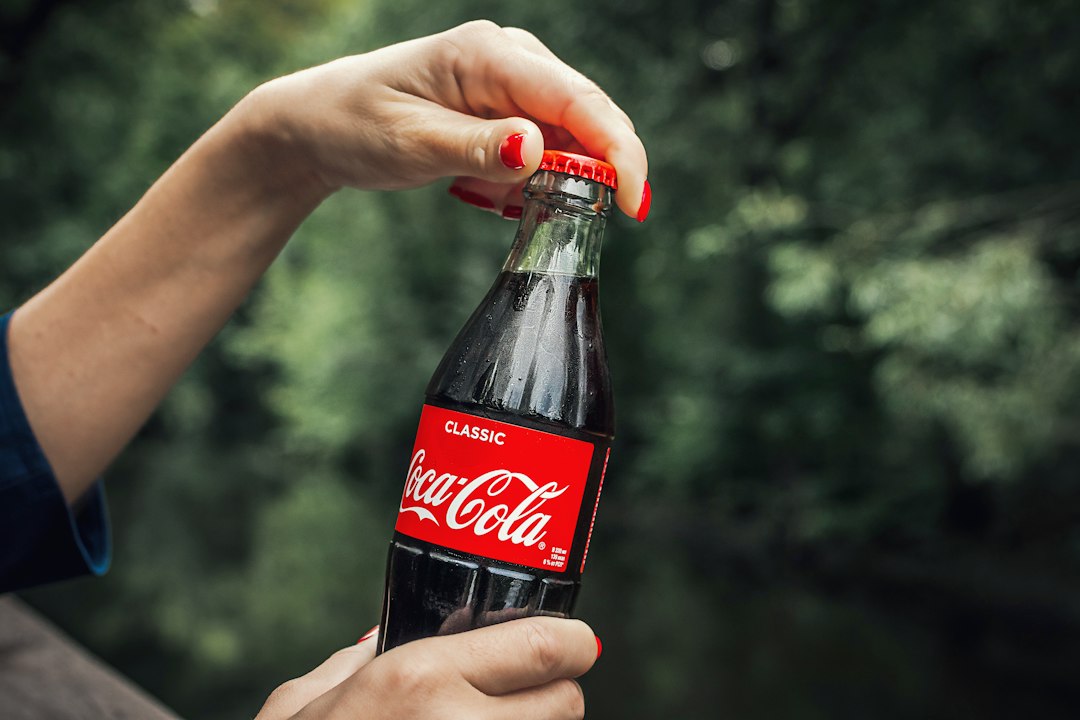
Chen Dashan held out the cola to Sister Zhao: “Open it for me.”
“Don’t you have hands?”
“Shaking.”
Sister Zhao took it, clicked the cap open, handed it back. The fizz rushed up, cold against his face. Chen Dashan took a big gulp and let out a long breath—as if exhaling two weeks’ worth of held breath all at once.
Tiantian woke at four in the afternoon.
The anesthetic hadn’t fully worn off; groggy, she called for her dad. Chen Dashan answered, voice hoarse.
By evening she had more spirit. Leaning over the little table, she wrote half a page in pencil, pinyin for the characters she couldn’t manage:
“Dear Dad:
I’m awake. The nurse said I had the loudest cry on the whole ward.
I read your letter. Some characters I didn’t know, I guessed.
You said to give people a hand—I remembered. Today I pressed the call button for Grandma in bed 3. She couldn’t reach it herself.
The crossed-out part in the letter—I know what it was. You didn’t write it, I won’t ask.
Hold on.
Your daughter, Tiantian”
Chen Dashan read the page three times, folded it, and put it in his chest pocket. Right next to the letter with its worn-soft edges.
A month later, Uncle Kang’s shop reopened.
Truthfully, it had never closed—it had only changed its face. The new sign was designed by Wanqing, same old red underneath, and beneath the four characters of “Youfu Eats,” a small line had been added: “Cola sold here. Only the good kind.”
The menu was redone. A new window had opened by the front, a wooden plaque bearing three brush-written characters: Hold-On Noodles.
Those three characters were not Chen Dashan’s writing. They were by Wanqing’s father, Teacher Lin—one month out of the ICU, his hand still trembling, he had practiced at home for a week, filling more than forty sheets of paper before choosing the steadiest one. The day Wanqing brought it over, she said, “My dad says these two words saved his daughter twice. The first time was the year I took my graduate exams. The second was this year. He says that makes him qualified to write them.”
On the main wall of the dining room hung a framed display. Inside, three things: a screenshot of a delivery order, one line in the notes field—tipping 5 yuan, please deliver first, thank you; an enlarged copy of a handwritten note—I traded the cola for the big bottle, no need to pay me back, just take care of yourself; and a pencil letter in pinyin and characters—the very one Tiantian had written.
Someone asked Uncle Kang what was worth framing. Uncle Kang slung his rag over his shoulder: “The treasure of the house.”
Opening day, Wanqing came, laptop on her back, saying she’d revise her proposal while she was at it. She sat at the window counter, ordered a bowl of Hold-On Noodles, and stopped her chopsticks halfway through: “Still the taste from back then.”
“The timing hasn’t changed,” Chen Dashan said from behind the wok.
Wanqing lowered her head and finished the bowl, soup and all.
Tiantian came too. Not fully recovered—she had to crouch and rest every few steps—but she insisted on seeing Grandpa Kang’s new sign. She tilted her head up, studying Wanqing. “Auntie, are you the big sister who drank the cola?”
Wanqing crouched down. “I am. And are you the little friend who pressed the button for Grandma?”
And that was how the two of them met. As if they’d known each other a long, long time.
Hold-On Noodles sold eighty bowls a day. Same craft as back then—if the timing wasn’t right, no bowl went out; if the timing was past, no bowl went out. Regulars urged him to expand. He shook his head: “No expanding. The timing lives in this one pot.”
On a Saturday at the end of October, Chen Dashan put on his rider’s jacket again.
Station Chief Zhou ran into him. “They don’t need you running orders anymore.”
“A man who stops running rusts,” he said, snapping his helmet on.
At eleven-thirty, an order popped up in the system. Xiaoma, out mentoring a rookie, had ridden off to charge his bike; the order hung in the pool, unclaimed, creeping toward timeout. The note read: pregnant, can’t cook, please prioritize, thank you.
Two months ago, that order—he’d hesitated for three blocks before accepting.
This one, he accepted the instant it rang.
Forty minutes later he delivered to the sixth floor. The woman who opened the door was visibly pregnant, thanking him over and over. Attached to the bag was a bottle of orange juice; before handing it over, Chen Dashan loosened the cap half a turn.
“Dry weather—I opened it for you first,” he said. “So it won’t give you trouble.”
The woman blinked, then smiled. “You’re really thoughtful, sir.”
Chen Dashan waved it off and went downstairs. His e-bike merged into the afternoon traffic. The sky was high, the clouds moving slowly; the plane trees along the road had begun to shed, leaf by leaf, falling without hurry.
He thought of the line in Tiantian’s letter. Thought of this year: the can of cola, the handwritten note, the five yuan. Thought of Uncle Kang’s great pot of ginger-soup noodles, Sister Zhao’s half a youtiao, Teacher Lin’s two words written forty times over. Thought of everyone in this city—who wasn’t living their own life while, on the way, reaching over to loosen someone else’s bottle cap?
Life is hard, he thought. But it’s nothing to fear.
Even when the water boils, don’t lift the lid—give it a moment. There will always be someone, somewhere you can’t see, opening the cap for you.
All you have to do is hold on.
(The End)
This story is adapted from real events. All names are pseudonyms.
Based on a true story